



Common infusion side effects include nausea, dizziness, fatigue, and temporary redness, swelling, or soreness where the IV was placed. Managing IV therapy side effects starts with noticing changes and telling your care team, especially if symptoms are severe or unusual. Trouble breathing or swelling of the face or throat requires urgent medical attention.
It’s understandable to wonder whether a new symptom is expected or needs attention. The answer depends on factors such as the medication, your medical history, and the condition being treated. This guide covers common reactions, changes at the injection site, and practical steps to take, including when a possible allergic reaction calls for immediate help.
Key Takeaways
- Notice changes around the IV site, including worsening redness, swelling, pain, or a red streak, and report them to your care team.
- Recognize that hives, facial or throat swelling, wheezing, or difficulty breathing may signal a severe allergic reaction requiring urgent care.
- Discuss your health history, medications, supplements, and possible treatment alternatives with your healthcare team to understand risks specific to your infusion.
- Track how you feel after treatment and tell your care team about symptoms that are unusual, strong, or persistent.
What Can Go Wrong at the Injection Site?
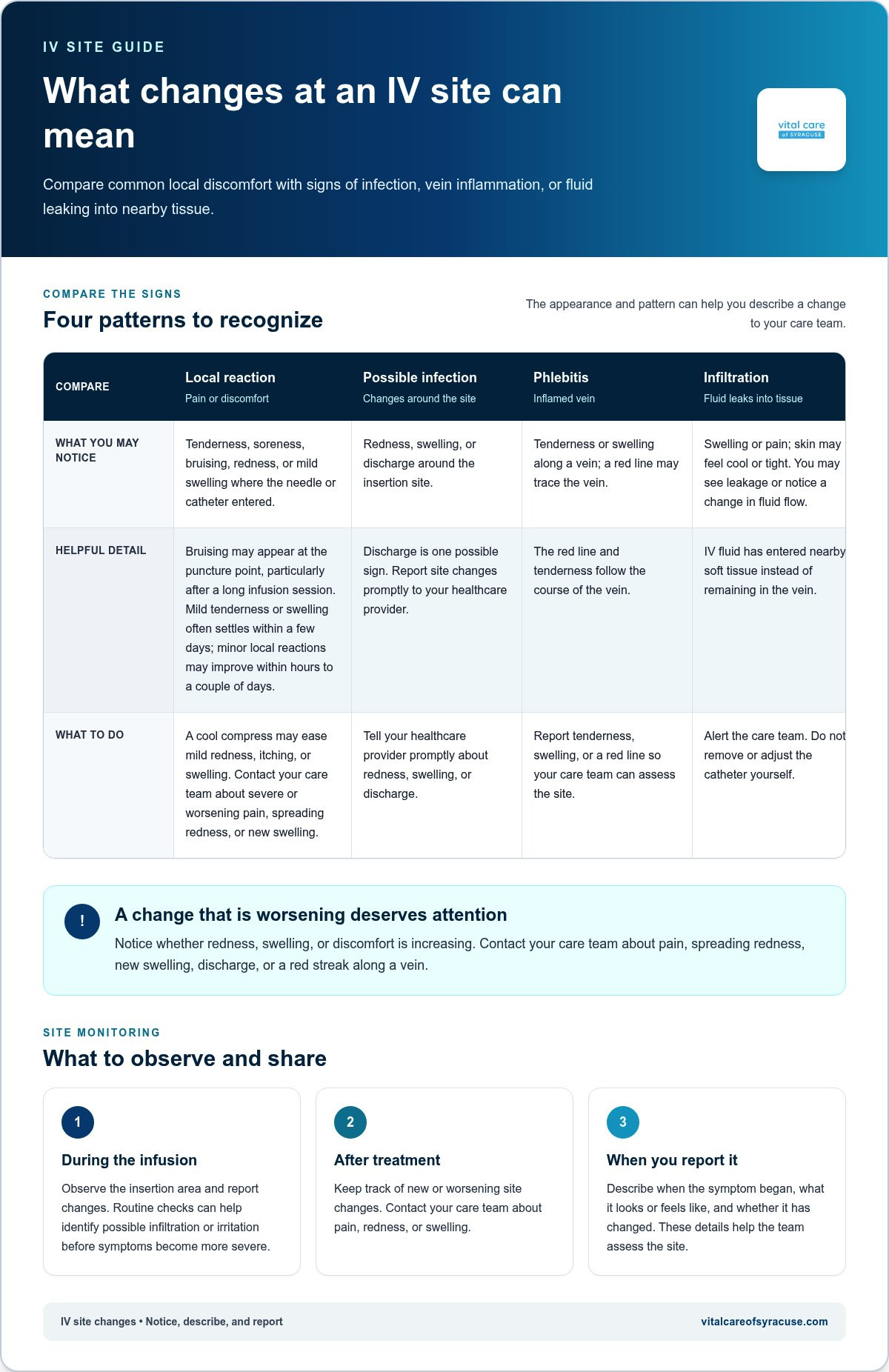
Pain, swelling, redness, or bruising can occur around an IV insertion site. Infection may cause redness, swelling, or discharge. Phlebitis can cause tenderness along a vein or a red line, while infiltration may cause cool, tight skin, swelling, leakage, or a change in fluid flow.
Insertion-Site Pain and Discomfort
An insertion-site reaction is discomfort or a visible skin change where the needle or catheter entered the vein. Its pattern can help guide follow-up. Bruising may appear at the puncture point, particularly after a long infusion session. Mild tenderness or swelling often settles within a few days, while minor local reactions may improve within hours to a couple of days.
A cool compress may ease mild redness, itching, or swelling. Contact your care team about severe or worsening pain, spreading redness, or new swelling rather than treating it as routine soreness.
Infection, Phlebitis, and Infiltration
These complications cause different changes at the site, so recognizing their signs can help you describe them clearly. Infection may cause redness, swelling, or discharge. Report these changes promptly to your healthcare provider. Phlebitis is inflammation of a vein that can cause localized tenderness, swelling, or a red line tracing the vein.
Infiltration occurs when IV fluid leaks into nearby soft tissue. Look for swelling, pain, cool or tight skin, leakage, or a change in fluid flow. Don’t remove or adjust the catheter yourself. Alert the care team so they can assess the site and respond. During administration, sterile supplies, skin preparation, and catheter-site care help minimize infection risk.
Site Monitoring and Follow-Up
Site monitoring involves observing the insertion area during an infusion and reporting changes so the care team can assess them early. Routine checks in an infusion suite can help identify possible infiltration or irritation before symptoms become more severe. Notice whether redness, swelling, or discomfort is increasing, and look for discharge or a red streak along a vein.
After the infusion, keep track of new or worsening changes and contact your care team about pain, redness, or swelling at the site. Describe when the symptom began, what it looks or feels like, and whether it has changed. These details help the team assess whether it may be a mild reaction or a complication that needs follow-up.
What If You Have an Allergic Reaction?
Infusion reactions can range from a mild rash to anaphylaxis, a severe, potentially life-threatening response. Recognizing symptoms and reporting them immediately helps the care team respond.
Infusion Allergies and Anaphylaxis
An allergic reaction occurs when the body responds to an infused medication or another substance. Anaphylaxis is a severe reaction that can develop rapidly. Because symptoms may escalate during administration, tell a medical professional as soon as you notice a change.
Watch for itching, rash, hives, or swelling. Wheezing, difficulty breathing, or swelling of the face or throat requires urgent or emergency care. Anaphylaxis can develop within minutes of allergen exposure. Infusion teams monitor patients and keep emergency medications and equipment available to respond to severe reactions.
Recognizing and Reporting Reactions
Report new symptoms clearly to the medical professional overseeing your infusion rather than waiting to see if they pass. During treatment, immediately mention itching, hives, or facial swelling, even if your breathing feels normal. If you develop trouble breathing or swelling of the lips, face, or throat, seek urgent help.
Vitamin toxicity and an allergy are different: excessive vitamin levels can disrupt electrolyte balance, while an allergy involves an immune response. Too much potassium can cause serious heart problems. Don’t assume hydration or drinking fluids will treat a suspected allergy or toxicity. Report symptoms so the care team can assess them and follow its response protocols.
Sharing Medication and Reaction History
A complete medical history gives the care team useful context to assess risks before an infusion. Share all medications and supplements, including vitamins, and describe any previous reactions to drugs or infusions. Include what happened, such as a rash, itching, or swelling, and when it began.
These details can help clinicians consider potential medication interactions and plan monitoring. A previous reaction doesn’t mean the same response will happen again, but leaving out that history can deprive the team of important context. Discuss known allergies before treatment begins, and report any new symptoms during the infusion.
What Are the Side Effects of Infusion Therapy?
Side effects vary with the medication, your medical history, and the condition being treated. Fluid overload can cause swelling, shortness of breath, or heart problems. Kidney disease and heart failure increase concern.
Long-Term Medication Effects
Long-term medication effects develop during extended treatment, rather than as immediate infusion reactions. Understanding a medication’s possible effects can help you discuss monitoring and alternatives with your healthcare team.
Some infusion medications that suppress immune responses may weaken the immune system. Certain drugs can cause peripheral neuropathy, with persistent numbness, tingling, or pain in the hands and feet. Long-term steroid treatment can reduce bone density and increase the risk of fractures and osteoporosis.
Before treatment, discuss its potential benefits, risks, and alternatives with your healthcare team. Share your full medical history, including heart, kidney, liver, and diabetes-related conditions. List every medication and supplement, since some ingredients can interact with prescriptions. Your health history and the specific drug help shape the discussion of risks.
Screening may include reviewing your medical history and assessing possible allergies. Ask whether baseline blood tests are advisable for your treatment. Depending on the medication, clinicians may monitor blood pressure, heart rate, or relevant blood test results. Understanding what may be monitored can help you feel informed about your care.
Fluid Overload Risks
Fluid overload occurs when fluid intake exceeds what the body can manage, potentially causing swelling, shortness of breath, or heart problems. Recognizing these changes matters because they can signal a need for clinical attention to fluid balance.
Kidney disease and heart failure can raise the risk of fluid overload during IV therapy. Before treatment, tell your healthcare team about either condition and any history of heart problems. The amount and rate of fluid, along with kidney and heart function, help clinicians assess risk and monitor treatment.
Tell the team about new swelling or difficulty breathing during an infusion. Some medications can also cause nausea, dizziness, fatigue, or changes in blood pressure or heart rate. Discuss which symptoms to report, how treatment will be monitored, and what alternatives may fit your medical needs.
Managing IV therapy side effects
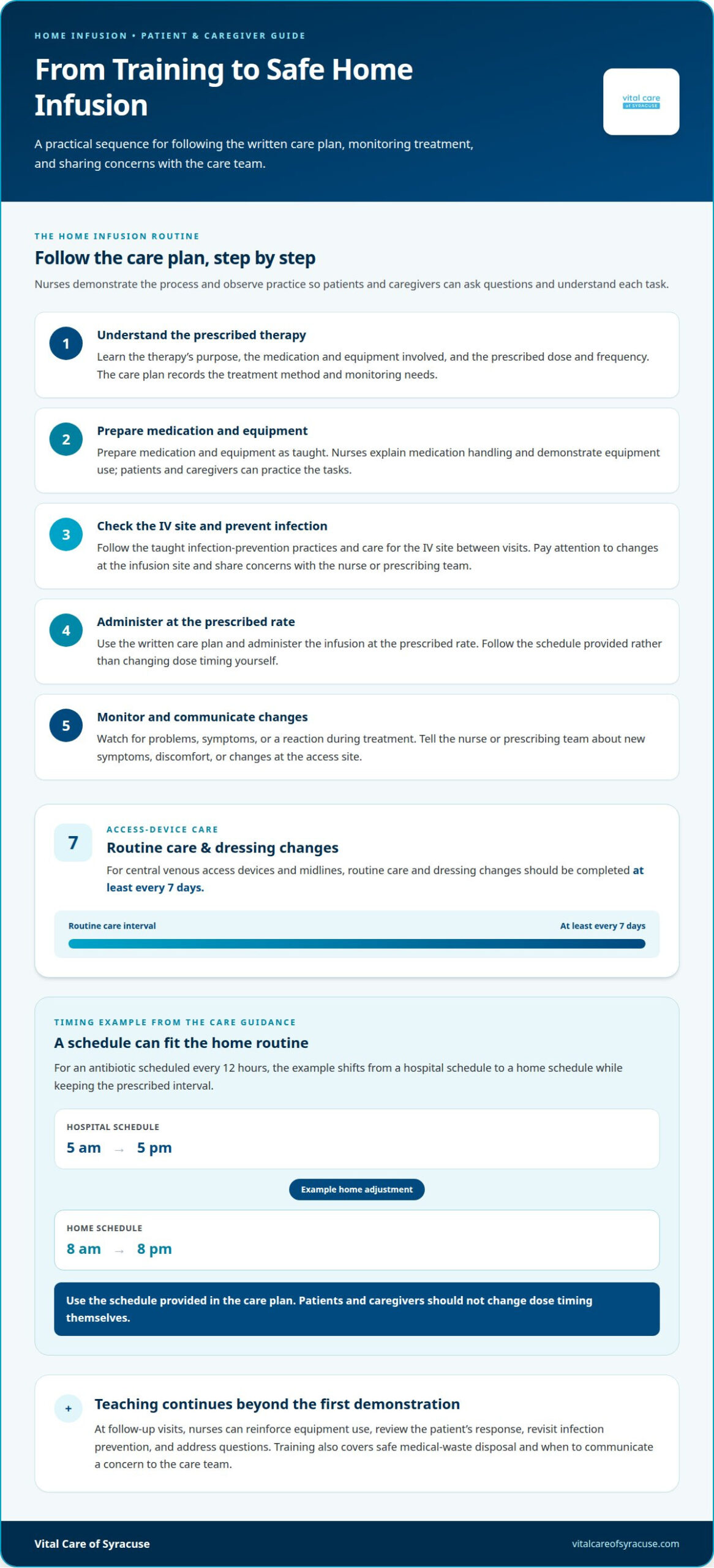
Managing side effects involves preparation, careful monitoring, and prompt communication with the infusion care team. The right response depends on the symptom, medication, and whether treatment is still underway.
Preventing Side Effects
Prevention means reducing avoidable risks before and during an infusion, so the team can respond promptly to changes. Before treatment, share your medical history, all medications and supplements, and any past reactions. During administration, report dizziness, faintness, or a rapid heartbeat rather than waiting for the infusion to finish.
Healthcare professionals use sterile techniques, assess the IV site, and monitor vital signs such as blood pressure and heart rate. Depending on the treatment, blood tests can help track drug levels or possible effects. Resting and staying hydrated before and after an infusion may help with nausea or dizziness, but follow your care team’s instructions about fluids.
Managing Common Side Effects
Managing a common reaction means matching the response to the symptom, since one remedy won’t suit every infusion effect. If nausea, headache, or intense flushing develops during a vitamin infusion, tell the person administering it; they may slow the drip. If you feel dizzy, lie down and alert staff. Rest and warm compresses may ease phlebitis, while the care team assesses the vein and decides whether the IV needs to be removed.
Fatigue after treatment may occur as your body adjusts to medication. Tell your providers about symptoms that feel severe, unusual, or persistent. Intravenous treatment delivers medication or nutrients into the bloodstream, bypassing the digestive system, so your response depends on the substance and your health needs. Don’t change an infusion rate or remove a catheter yourself.
How Long Side Effects Last
How long symptoms last varies by symptom and treatment. Mild IV-site discomfort or swelling after vitamin IV therapy usually resolves within hours or a day; mild local reactions may improve within hours to a couple of days. Bruising or tenderness can take a few days to improve.
Track how you feel for 24-48 hours after treatment, noting when symptoms begin and whether they change. Seek medical advice for a headache that lasts beyond a day. For strong, unusual, or persistent symptoms, stop an ongoing infusion and contact a licensed clinician or emergency services. For clinician-supervised infusion care, explore infusion care options.
Vital Care of Syracuse: Anti-infective Therapy
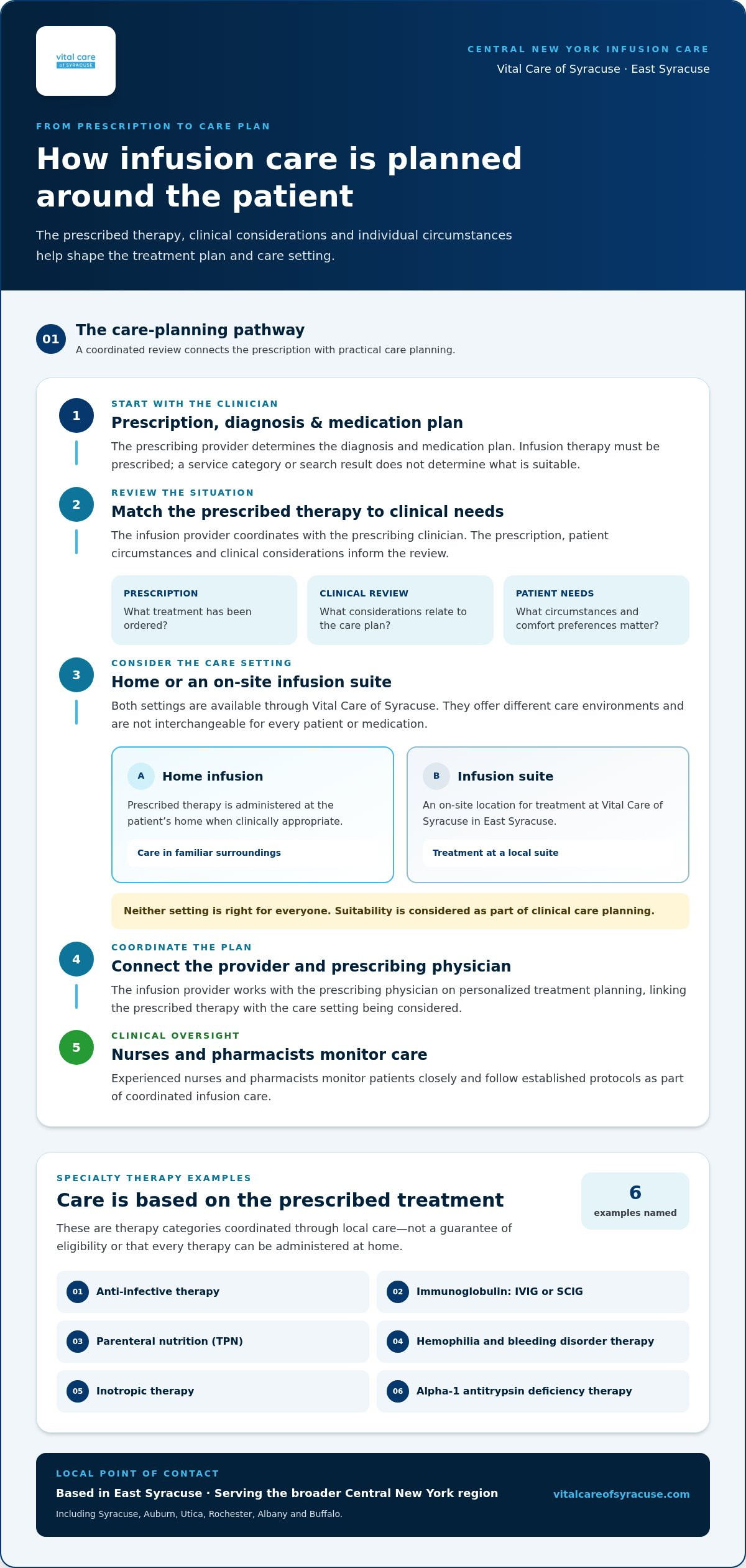
Vital Care of Syracuse provides Anti-infective Therapy for patients prescribed treatment to address infections. If your clinician has recommended infusion therapy as part of your care, this service may be relevant. Severe difficulty breathing or facial or throat swelling requires urgent medical attention, not a routine service inquiry.
Discuss new or concerning symptoms with your prescribing care team, including when they began and how they have changed. If you have been prescribed Anti-infective Therapy, Vital Care of Syracuse provides this service as part of its infusion care. The team also provides Immunoglobulin (IVIG/SCIG), Parenteral Nutrition (TPN), and Hemophilia and Bleeding Disorder Therapy.
Contact Vital Care of Syracuse to learn more about its infusion therapy services.
Make Your Next Infusion Decision With Confidence
Your next step can be a focused conversation about what treatment is intended to address and how it fits your care needs. Ask how your response will be monitored and which symptoms should prompt follow-up. This shared understanding can make managing IV therapy side effects feel more considered, with a clearer plan for raising concerns as they arise.
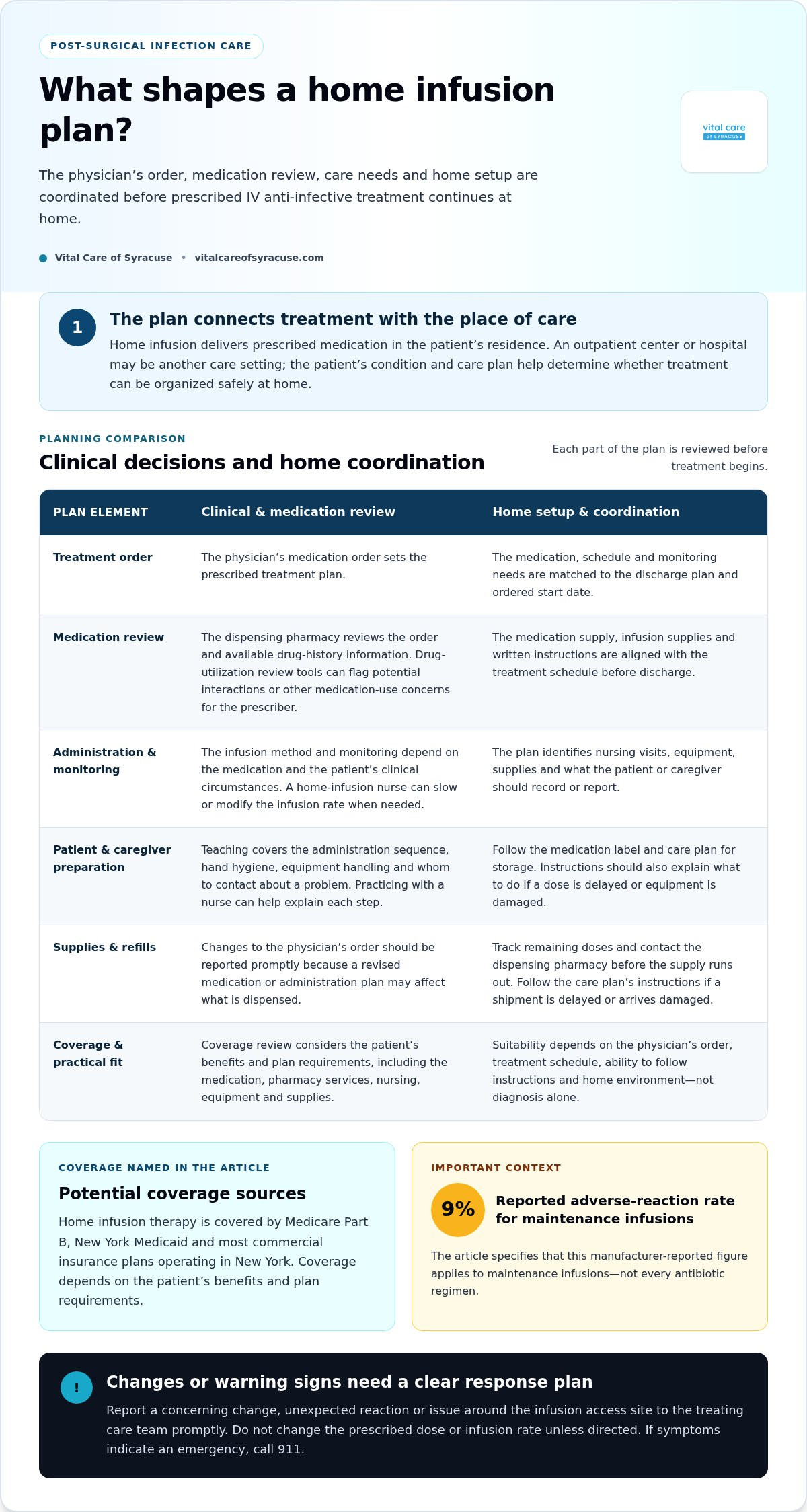
For prescribed infusion care, Vital Care of Syracuse offers Anti-infective Therapy, Immunoglobulin (IVIG/SCIG), and Parenteral Nutrition (TPN). The right service depends on your treatment plan, so use your conversation with your healthcare team to clarify the care you need and the role home infusion may play.
Contact Vital Care of Syracuse to discuss its infusion therapy services. A thoughtful next step can help you feel more prepared for the care ahead.
Frequently Asked Questions
What Are the Potential Downsides of IV Therapy?
Potential downsides include medication reactions, discomfort from IV access, and the need for clinical monitoring. Because medication enters the bloodstream directly, its effects can differ from oral treatment and may begin during administration. Before starting, ask what the prescribed infusion is intended to address, which effects are associated with that medication, and what symptoms call for prompt follow-up.
Can IV Drips Damage Your Veins?
Repeated IV access can contribute to vein inflammation or scarring, and a single infusion can irritate the insertion area. Tell the care team if a vein feels unusually tender or a line becomes difficult to use, especially if you receive recurring treatment. Your IV access history and the condition of your available veins help clinicians plan appropriate access for ongoing care.
Can IV Therapy Cause Serious Health Problems?
Yes, serious problems can occur, though the risk depends on the medication, fluid amount, and a person’s health. Severe allergy, excess fluid, or electrolyte disruption can require urgent attention. If symptoms include difficulty breathing, facial or throat swelling, faintness, or new breathing difficulty, alert medical professionals immediately or seek emergency care rather than waiting for a routine appointment.
Can You Get Too Much of a Good Thing?
Yes. More fluid or nutrients aren’t automatically better, and excessive amounts can disrupt the body’s balance. For example, too much potassium can cause serious heart problems, while excess IV fluid can contribute to swelling or shortness of breath. A safe plan considers the prescribed dose, the reason for treatment, and relevant kidney or heart conditions, rather than assuming extra intake improves results.
What Are the Real Disadvantages of IV Therapy?
IV therapy requires access to a vein, supervised administration, and attention to treatment-specific risks. It may also be unsuitable for some people, particularly when kidney disease or heart failure increases concerns about fluid balance. Discuss alternatives, medication interactions, and monitoring needs with your healthcare team. Careful planning supports managing IV therapy side effects without treating every infusion alike.
What are common side effects of IV therapy?
Common effects can include nausea, dizziness, fatigue, headache, or changes in blood pressure, depending on the medication and the person receiving it. Some people also experience temporary soreness or bruising where the IV was placed. Briefly note when a symptom starts, what you were receiving, and whether it changes; that record can help your care team assess the reaction.
Leave a Reply