



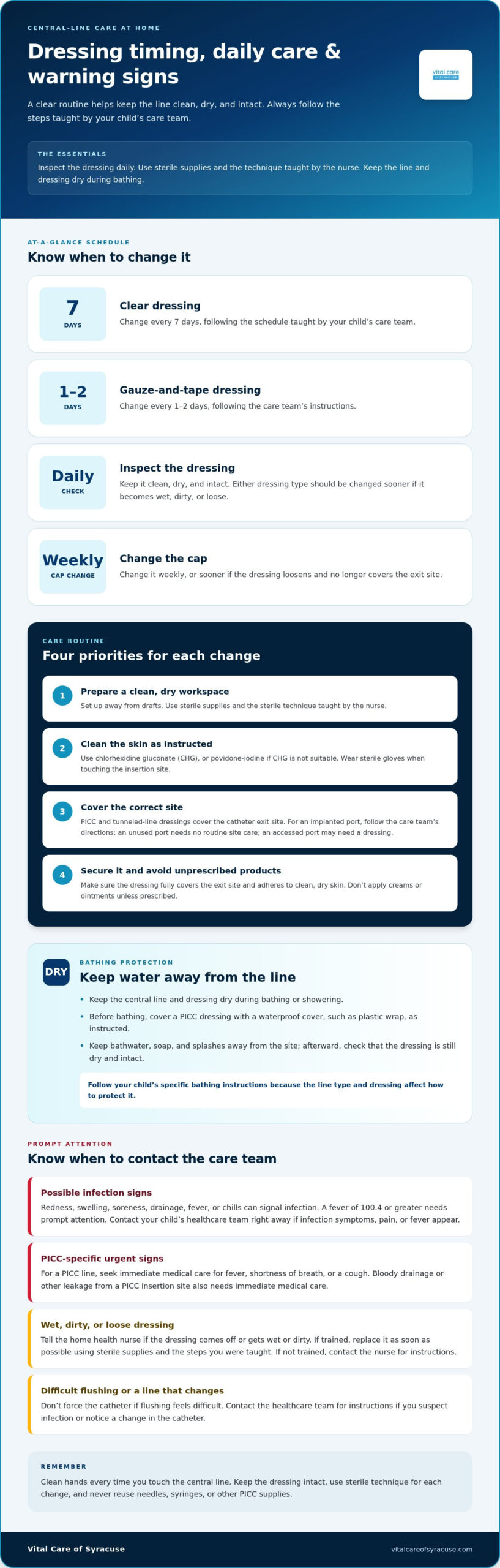
A central line is a catheter that provides access to a large vein for ongoing treatment, and managing central line care at home means keeping the line clean, dry, and intact while following the care team’s instructions. A clear dressing is generally changed every 7 days, while a gauze-and-tape dressing is changed every 1-2 days; either should be changed sooner if it becomes wet, dirty, or loose. Caregivers should learn the specific steps and bathing guidance before a child leaves the hospital.
It’s understandable to want a clear routine when your child comes home with a central line. Careful hand hygiene, the right supplies, and knowing when to contact the care team can make daily care more manageable and help reduce infection risks.
This guide explains what a central line is, how to prepare for a dressing change, which supplies are used, and how to protect the line during bathing and daily activities. It also covers signs that need prompt attention, so you can care for your child with greater confidence.
Key Takeaways
- Learn how central-line types differ and why the line’s use and design shape its care routine.
- Prepare a clean, dry workspace and use the sterile supplies and dressing-change steps taught by the care team.
- Build hand cleaning and catheter-cap disinfection into every line-care routine to help reduce infection risk.
- Recognize changes such as redness, soreness, drainage, or fever, and know when to alert the healthcare team.
- Understand how home infusion therapy, including Anti-infective Therapy, can support treatment prescribed for care at home.
How do I change my child’s dressing at home?
PICC and tunneled catheters need a clean, dry dressing; an unused implanted port doesn’t need routine site care. Clean the skin with chlorhexidine gluconate (CHG), or povidone-iodine if CHG isn’t suitable, following the nurse’s instructions. Keep the line dry during bathing, and tell the home health nurse if its dressing gets wet or loose.
-
Check Dressing-Change Frequency
Follow the schedule taught by your child’s care team, and inspect the dressing daily. A clear dressing is changed every 7 days; gauze-and-tape dressings are changed every 1-2 days. Replace either sooner if it becomes wet, dirty, or loose. The cap is changed weekly, or sooner if the dressing loosens and stops covering the exit site. Keep the dressing clean, dry, and intact between changes.
-
Change the Central-Line Dressing
Set up in a clean, dry area away from drafts, then use the sterile technique taught by the nurse. Wear sterile gloves when touching the insertion site, and clean the skin with CHG; use povidone-iodine if your child can’t have CHG on the skin. PICC and tunneled-line dressings cover the catheter exit site. For an implanted port, follow the care team’s directions. An unused port needs no routine care, while an accessed port may need a dressing. Don’t apply creams or ointments unless prescribed.
-
Care for the Line During Bathing
Keep the central line and dressing dry during bathing or showering. Before your child gets in, cover the PICC dressing with a waterproof cover, such as plastic wrap, as instructed. Keep bathwater, soap, and splashes away from the site, since water can increase infection risk. Afterward, check that the dressing is still dry and intact. Follow your child’s specific bathing instructions, since the line type and dressing affect how to protect it.
-
Respond to a Wet or Loose Dressing
Tell the home health nurse if the dressing comes off or gets wet or dirty. If you’ve been trained to change it, replace it as soon as possible using sterile supplies and the steps you were taught. Check that the new dressing fully covers the exit site and adheres securely to clean, dry skin. Don’t leave the site uncovered, reuse supplies, or apply unprescribed solutions. If you haven’t been trained to change it, contact the nurse for instructions.
Can a catheter-associated bloodstream infection be treated?
Yes. Antibiotics often treat catheter-associated bloodstream infections successfully, although the catheter may need to be removed if the infection doesn’t improve. Follow these steps to recognize possible complications early and reduce avoidable infection risks.
- Watch for infection signs. Check the skin around the central venous catheter and notice changes in how your child feels. Redness, swelling, soreness, drainage, fever, or chills can signal infection. A fever of 100.4 or greater needs prompt attention. Contact your child’s healthcare team right away if symptoms of infection, pain, or fever appear. For a PICC line, seek immediate medical care for fever, shortness of breath, or a cough.
- Look for changes at the site and line. Notice whether the catheter looks or feels different, and watch for bleeding or leakage. Bloody drainage or other leakage from a PICC insertion site needs immediate medical care. Contact a healthcare professional or hospital emergency department if you suspect infection or notice a change in the catheter. These signs need attention even if the dressing looks intact.
- Keep likely sources of germs away. Contact with stool, drool, vomit, dirt, or water can increase infection risk around a central line. Keep the dressing clean and dry, and protect the line during bathing. Family members and visitors shouldn’t touch the catheter or its tubing. Keep scissors and other sharp objects away, since they can damage the line or dressing and create another care concern.
- Use a consistent care routine. Clean your hands with soap and water or alcohol-based hand rub every time you touch your child’s central line. Follow the steps you were taught to clean the catheter and its entry points before and after use. Keep the dressing intact, and use sterile technique for each dressing change. Never reuse needles, syringes, or other PICC supplies; discard any supplies that fall on the floor.
- Respond carefully to blockage or suspected infection. If flushing feels difficult, don’t force the catheter; contact the healthcare team for instructions. A blockage can be a complication, and forcing fluids may damage the line. If infection is suspected, the care team will assess symptoms and treatment needs. Antibiotics often work, but the catheter may need to be removed if the infection doesn’t improve with treatment.
What is a Central Line?
Identify your child’s line type before organizing care, because its location and lumens affect how treatment is delivered. A central line is a catheter placed in a large vein to provide ongoing access for prescribed therapy.
- Recognize a PICC line. A peripherally inserted central catheter, or PICC, enters through the arm and extends toward a large vein above the heart. Its tube is about 24 inches long and may have one or two lumens, the channels used to deliver fluids or medications. PICCs can provide intravenous medications, blood transfusions, extra fluids, or nutrition over an extended period. Note which lumen is used for each prescribed treatment.
- Identify a tunneled catheter. A tunneled central line may enter a blood vessel several inches away from where it exits the chest. The vessel entry point and the visible point where the catheter leaves the skin are separate locations. Ask the care team to show you both on your child’s line diagram or during teaching. Knowing where the line sits helps you describe changes accurately.
- Count the lumens without pulling the line. A single-lumen catheter has one opening or tube; a double-lumen catheter has two separate tubes within one outer tubing. A central venous catheter can have up to five lumens. Each lumen provides a route for treatment, so identify them by their labels or instructions. Don’t use a lumen for a purpose other than the one prescribed.
- Understand how an implanted port differs. A surgically implanted port sits beneath the skin and provides access when treatment requires it. Unlike other central-line types, an unused implanted port doesn’t need routine care. Don’t automatically apply external catheter-care steps to a port; follow the instructions for its current status and care. The device and whether it’s in use determine the routine.
- Respond carefully to a line that seems blocked or damaged. If flushing feels difficult, don’t force it; contact the healthcare team. A PICC can have complications such as blockage, vein inflammation, blood clots, bleeding, or infection. Look for swelling, bleeding, leakage, or changes in how the device looks or feels, and report them promptly. A PICC that comes out completely needs immediate attention: press sterile gauze on the site until bleeding stops.
Hand hygiene and catheter-cap disinfection
Use the same sequence whenever you handle your child’s catheter, including before treatment or flushing. Clean hands and a disinfected cap help reduce the risk of germs entering the line.
- Clean your hands before touching the line. Use soap and water or alcohol-based hand rub every time you touch your child’s central line. Do this before handling tubing, preparing prescribed fluids, or beginning catheter care. If your hands become contaminated during the task, clean them again before continuing. Keep your hand-cleaning product with the central-line supplies, so it’s ready before you handle the catheter.
- Gather the supplies and follow the taught sequence. Set out the supplies specified by your healthcare professional before you start. This avoids searching for an item midway through treatment, while the catheter is being handled. Use the antiseptic wipe or solution supplied for cap disinfection. Don’t substitute a household cleaner or another product. Keep saline and other prescribed fluids separate from the materials used to clean the catheter cap.
- Wear gloves before accessing the catheter. After cleaning your hands, put on gloves as taught before giving medication or fluids. Gloves don’t replace hand hygiene, so do both. Handle the catheter and its connection carefully, following the sequence demonstrated by the nurse. If a glove touches an unclean surface before you access the line, pause and follow your training for replacing it.
- Scrub the injection cap for the full instructed time. Use a CHG wipe to scrub the injection cap for 15 seconds, then let it dry completely. Some care instructions use an alcohol wipe instead: scrub for 15 seconds and allow at least 5 seconds of drying before flushing. Follow the protocol provided for your child’s catheter; don’t combine products or shorten the scrub or drying time.
- Let the cap dry before connecting anything. Don’t touch or blow on the disinfected surface while it dries. Wait for the full drying time specified in your instructions. Once dry, connect the prescribed syringe or tubing using the method taught by the healthcare professional. This sequence matters before flushing with saline or administering treatment, because the cap is the access point to the catheter.
- Stop if the cap is missing or the routine is interrupted. Don’t access an open catheter connection or improvise a replacement. Contact the home care nurse, clinic, or doctor if the injection cap is missing. If you’re unsure whether the cap was scrubbed or dried correctly, pause before connecting fluids and follow your care team’s instructions for restarting safely.
Supplies for home central-line care
Organize supplies by task so you can prepare dressing changes and prescribed infusions carefully. Keep central-line items separate from diapers, ostomy supplies, and feeding supplies.
-
Gather Home-Care Supplies
Set aside sterile gloves, the dressing used for your child, and skin antiseptic. CHG is used to clean the insertion site; povidone-iodine may be used if CHG isn’t suitable. Include the injection-cap disinfectant and any protective cap covers provided for the line. Check packages before use, and discard PICC supplies that fall on the floor. Never reuse needles, syringes, or other PICC supplies.
-
Prepare Supplies for Flushing
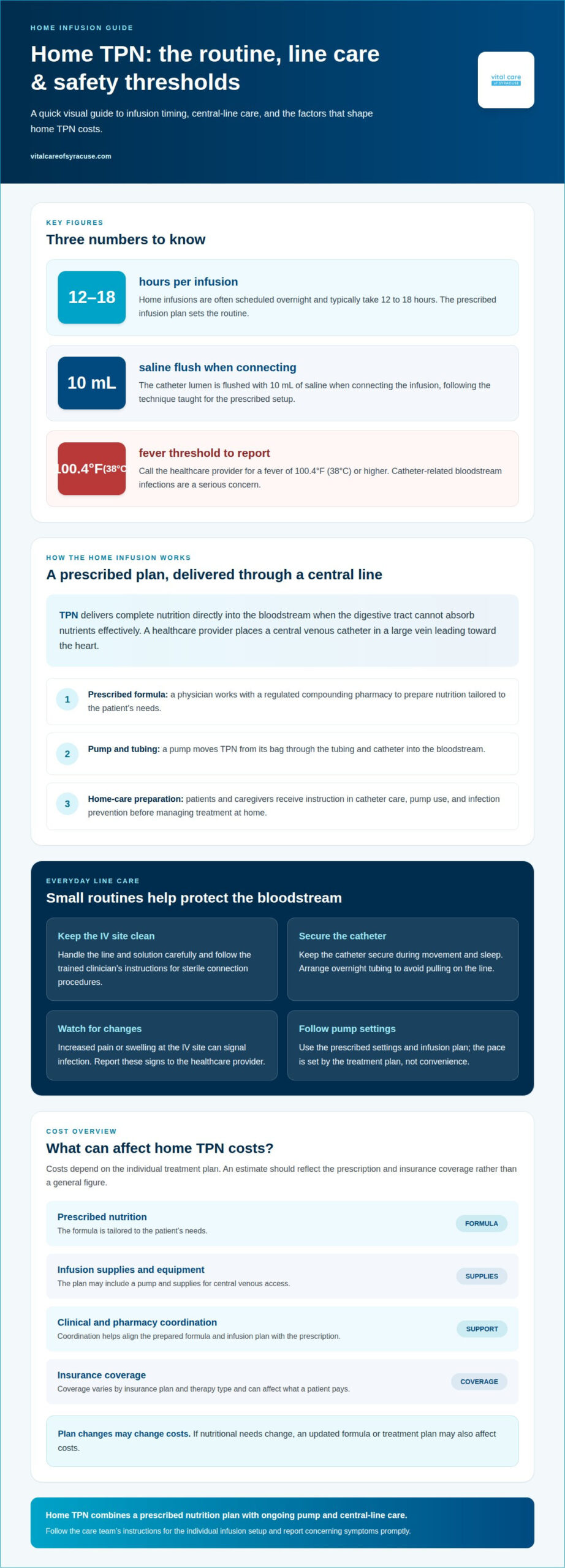
Before flushing, gather the prescribed saline or heparin-and-saline solution, an injection syringe, and the cap-cleaning supplies specified in your instructions. Use a syringe with a capacity of at least 10 mL; don’t substitute a smaller one. PICC lines should be flushed with saline or heparin only as directed by the doctor. Don’t force the line if flushing feels difficult.
- Follow the child’s written flushing schedule. The supplied plan should state the solution, timing, and steps for each lumen. For a child 28 days old or younger, the central line should be flushed every 8 hours each day; for a child older than 28 days, every 12 hours each day. Central lines may use saline or a heparin-and-saline mix to help remain open. Follow the care team’s specific instructions for your child.
- Store the kit cleanly and separately. Keep central-line supplies together in a clean, dry place, away from drafts during a dressing change. Don’t store them beside diapers, ostomy supplies, or G-tube feeding items. Separate clean supplies from used materials, and keep scissors and other sharp objects away from the catheter. This setup makes it easier to find the right item without mixing supplies between care tasks.
- Complete training before doing care independently. Before leaving the hospital, caregivers should receive detailed catheter-care training, including flushing and dressing changes. Ask for repeat instruction in stages, written directions, and visual materials; demonstrate each task back to the nurse. Teaching is easier to absorb in a quiet place, not when everyone is exhausted after discharge. Keep the home health nurse’s contact details with the written instructions for care questions.
Vital Care of Syracuse: Anti-infective Therapy
Vital Care of Syracuse provides Anti-infective Therapy as part of its home infusion services for people receiving prescribed treatment. When a healthcare professional recommends antibiotics for a catheter-associated bloodstream infection, this therapy may be part of the treatment plan. Infection symptoms such as fever, chills, redness, soreness, or drainage still need prompt attention from your child’s healthcare team; home infusion is not a substitute for urgent assessment.
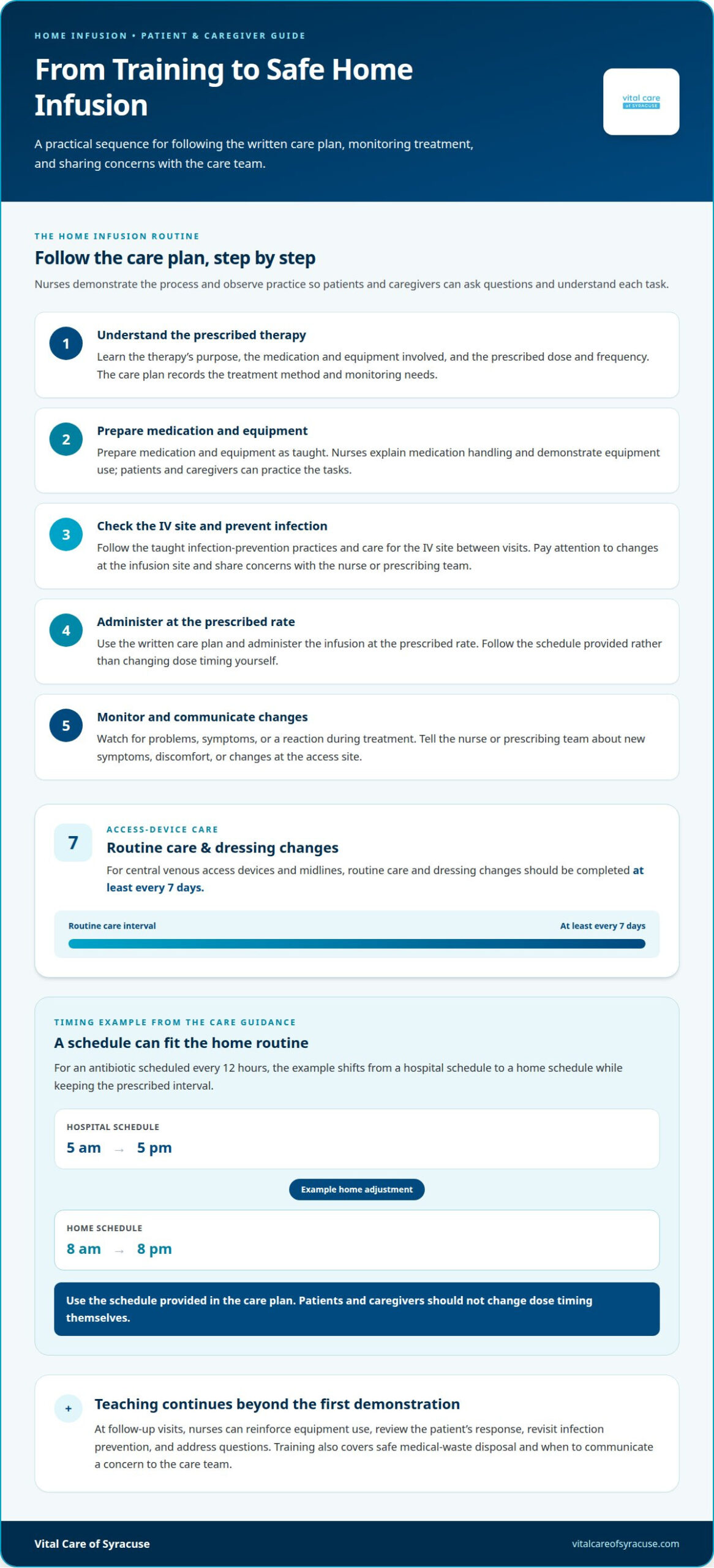
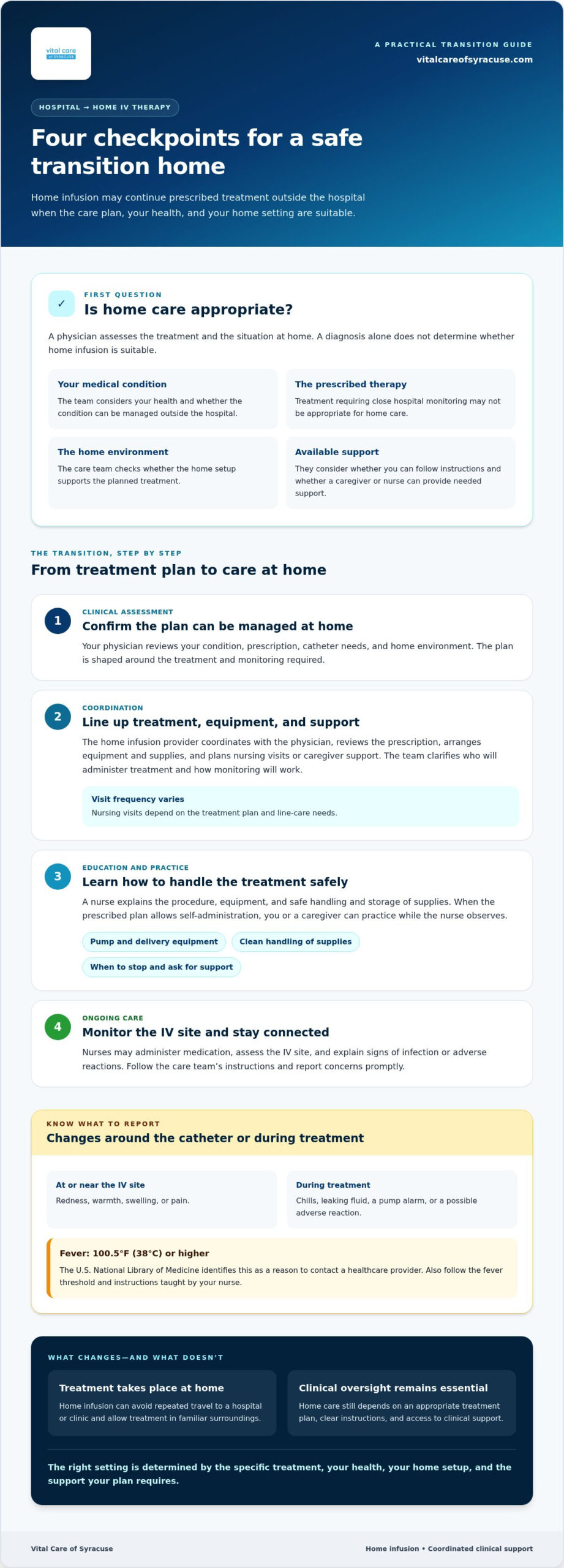
Care at home also depends on following the prescribed medication schedule and catheter instructions closely. The care team determines whether home infusion fits the treatment plan and coordinates therapy around the patient’s clinical needs. For families managing complex treatment alongside central-line care, understanding the infusion plan can help clarify each care task.
Contact Vital Care of Syracuse to discuss home infusion care.
Make Your Home-Care Routine Work for Your Family
As your family settles into care at home, keep the written instructions somewhere easy to reach and use them to guide each routine. A simple record of questions, changes, and treatment tasks can help you communicate clearly with the healthcare team. Managing central line care at home is a learned process, and your confidence can grow as you practice the steps taught for your child.
When home infusion is part of the prescribed plan, Vital Care of Syracuse offers Anti-infective Therapy, Immunoglobulin (IVIG/SCIG), and Parenteral Nutrition (TPN). These services support different treatment needs, while your child’s healthcare team guides decisions about their care.
For information about home infusion support, contact Vital Care of Syracuse. Take each care task one step at a time, and keep your child’s care team involved as needs change.
Frequently Asked Questions
What else can I do when my child goes home with a central catheter?
Before discharge, make a care station with written instructions, a supply list, and contact details for your child’s nurse or doctor. Managing central line care at home is easier when caregivers know who handles each task; practice the steps using teach-back so the nurse can clarify anything uncertain. Store central-line supplies apart from diapers, ostomy items, and feeding supplies. Ask visitors and family members not to touch the catheter or tubing.
What instructions should I follow after my procedure?
Use the written instructions for your child’s specific catheter and procedure, since care can differ by line type. After central-line surgery, patients shouldn’t lift anything heavier than 5 pounds for 3 days. After placement, secure the line with a tight-fitting tank top, undershirt, or sports bra for at least 1 night. Follow the care team’s directions for activity, bathing, medication, and flushing rather than relying on another patient’s routine.
When should I call my doctor?
Contact your child’s healthcare team promptly for fever, pain, chills, redness, swelling, soreness, or drainage near the catheter. Get in touch if the line changes in appearance or feel, the injection cap is missing, or flushing becomes difficult. Don’t force a line that won’t flush. Describe what changed and when it began, then follow the care team’s instructions.
Will it hurt?
Your child’s experience can vary depending on the care task and catheter. Tell the healthcare team if your child reports soreness at the insertion site, since it may need attention. During routine care, explain each step in simple language and let your child know before you touch the line. Don’t apply cream or ointment to the insertion site unless prescribed.
How often should central line dressings and caps be changed?
Follow the schedule for your child’s dressing type: a clear dressing is changed every 7 days, while gauze-and-tape dressings are changed every 1-2 days. Change either sooner if it becomes wet, dirty, or loose. The cap is changed weekly, or sooner if a loose dressing no longer covers the exit site. Keep a written schedule with the supplies to help caregivers follow the routine.
What are signs of a central line infection, blockage, or displacement?
Watch for redness, swelling, soreness, drainage, fever, or chills, which may indicate infection. A line that’s difficult to flush may be blocked; never force it. Notice changes in how the catheter looks or feels, or any bleeding or leakage. If a PICC comes completely out, press sterile gauze on the site until bleeding stops, about 2 to 5 minutes, and seek prompt medical guidance.
When should you call your healthcare provider or seek emergency care for central line problems?
Contact your child’s healthcare team right away for infection symptoms, pain, fever, or a change in the catheter’s appearance or feel. A child with a PICC who develops shortness of breath, a cough, fever, or bloody drainage or leakage from the insertion site needs immediate medical care. If the catheter comes out completely, apply sterile gauze and seek urgent medical guidance rather than trying to put it back.
How can you prevent central line-associated bloodstream infections at home?
Preventing infection while managing central line care at home starts with cleaning your hands before every contact and keeping the dressing dry and intact. Protect the catheter from water, dirt, and contact with stool, drool, or vomit. Don’t reuse needles, syringes, or PICC supplies, and discard supplies that fall on the floor. Keep visitors from handling the tubing, and follow the routine you were taught for every line access.
Leave a Reply