



A delivery alone isn’t home infusion care. Home infusion therapy lets eligible patients receive prescribed medication or treatment at home, with a nurse administering care and providing education and monitoring. Home infusion supply delivery supports that care by bringing the prescribed medication and necessary supplies to the home.
It’s understandable to want clear answers about what arrives, how treatment works, and whether home care is appropriate. A healthcare provider must prescribe therapy, and the patient’s condition and ability to receive treatment safely at home are important considerations.
This guide explains what home infusion involves, which conditions it may treat, and how to find a provider suited to your care needs. You’ll also learn what to expect from delivery and how clinical support fits into treatment at home.
Key Takeaways
- Learn how prescribed medication, supplies, and clinical support work together to make infusion care at home possible.
- Recognize the range of conditions that may be treated with infusion therapy and how treatment needs can differ.
- Understand what factors shape whether a prescribed infusion can be safely managed at home.
- See how a home infusion provider can coordinate treatment and support patients through the care process.
What is home infusion therapy?
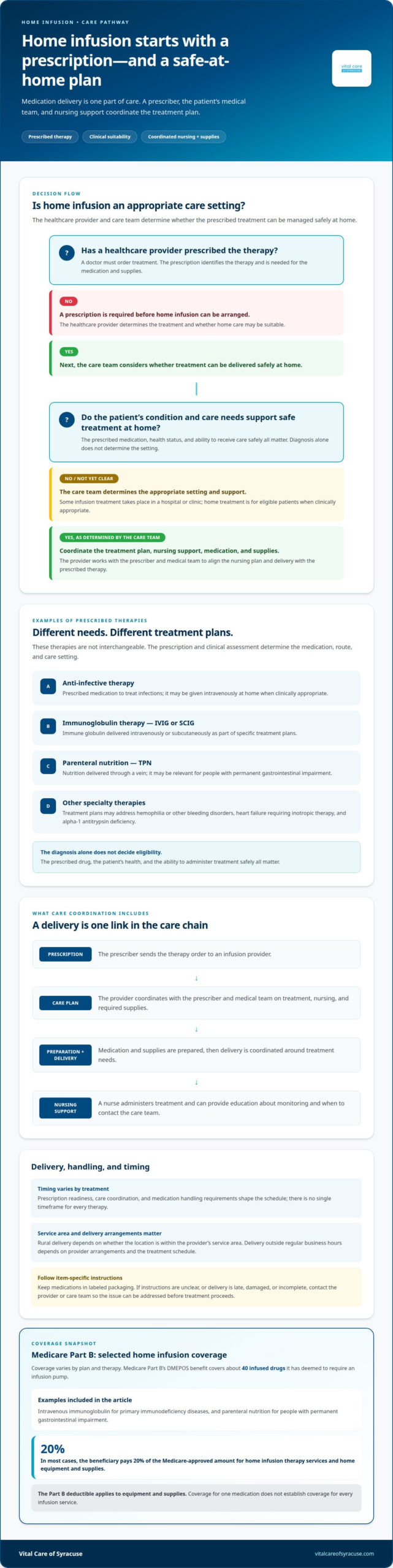
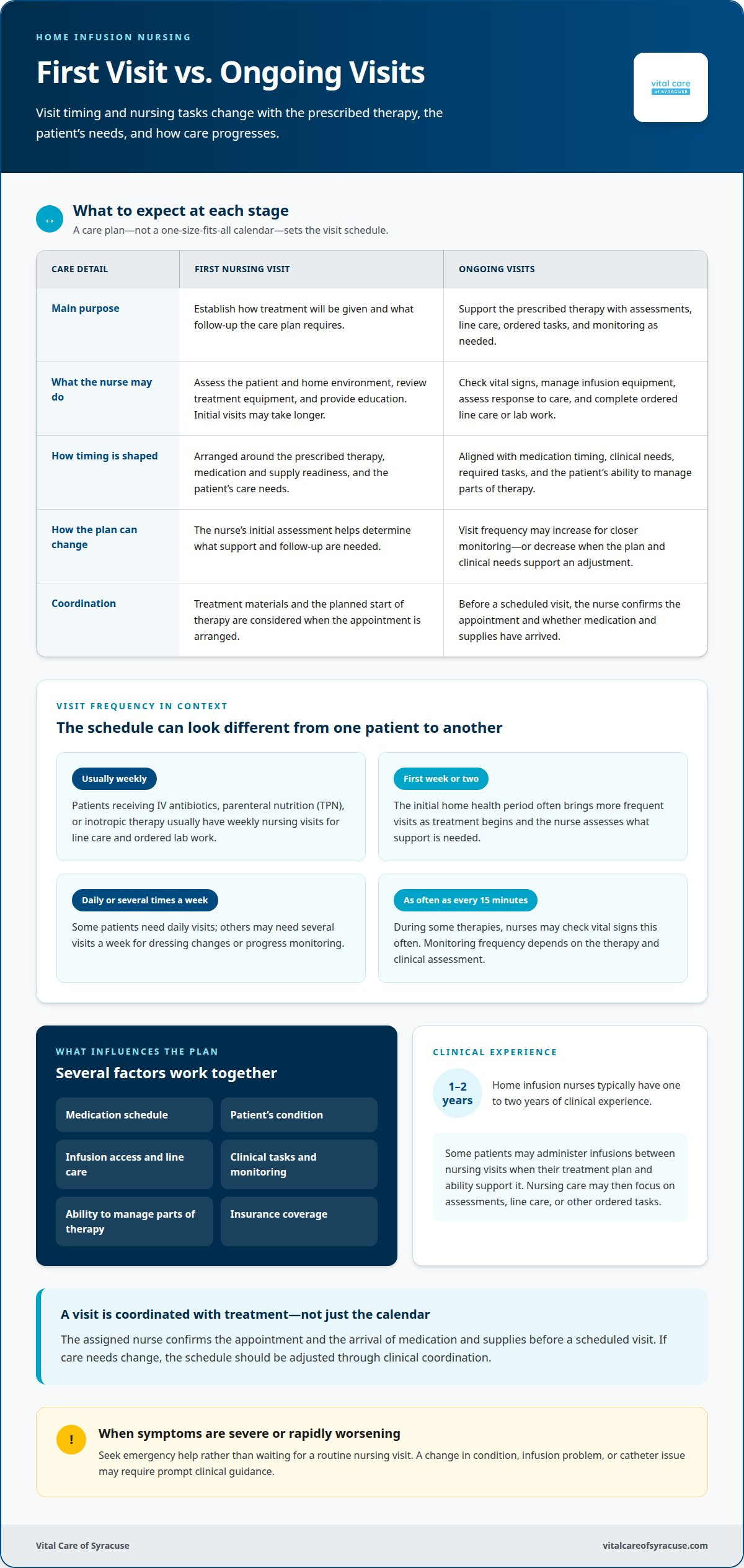
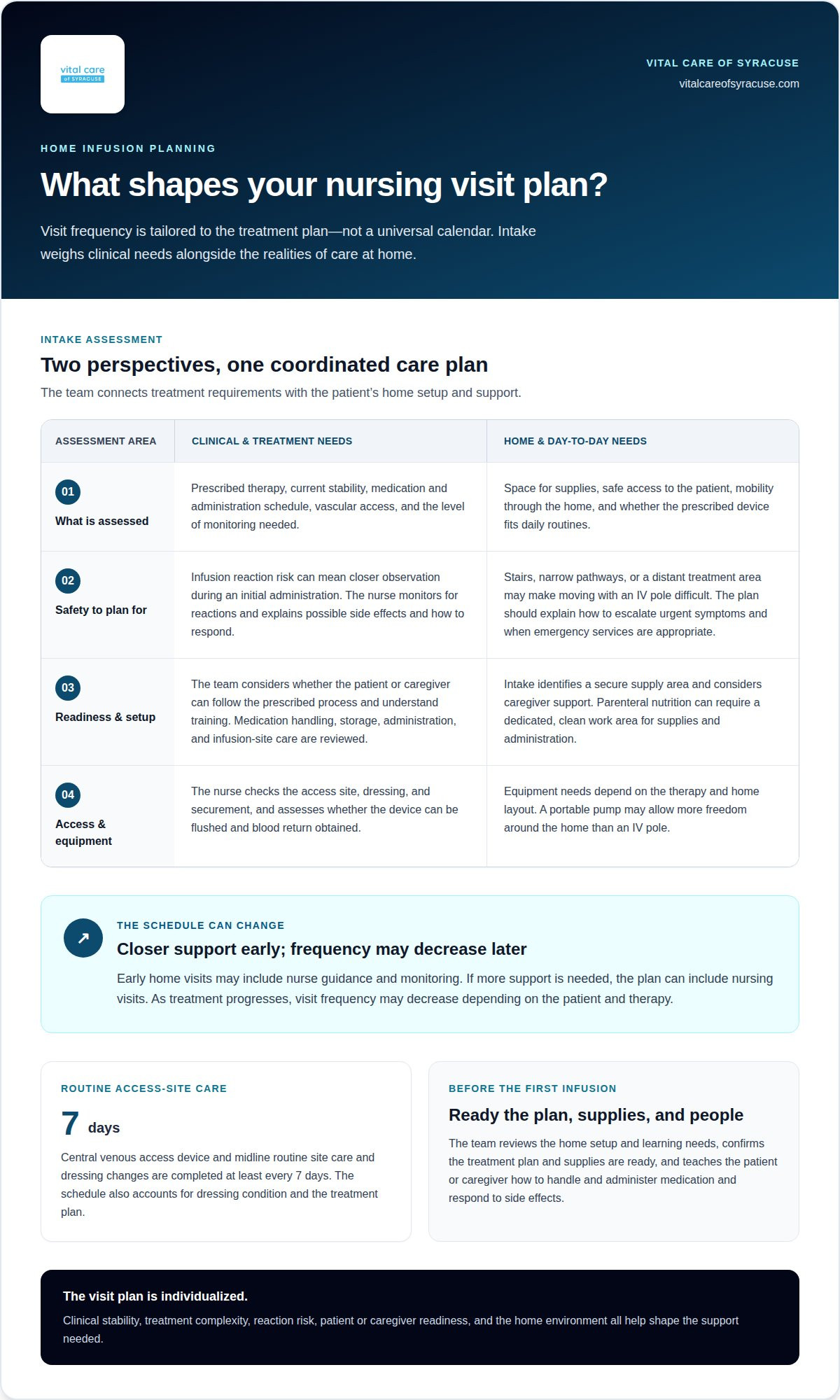
Home infusion therapy lets eligible patients receive intravenous or subcutaneous medication at home instead of in a hospital or clinic. A doctor must order treatment, and a prescription is needed for the medications and supplies. A nurse administers therapy and can teach patients and caregivers about treatment, monitoring, and when to contact the care team.
Before delivery, the infusion provider coordinates with the prescriber and the patient’s medical team. The prescription identifies the therapy, while the patient’s condition and ability to receive care safely at home help determine whether home treatment is appropriate. The provider and care team also coordinate the nursing plan and supplies needed for the prescribed medication.
To arrange home infusion supply delivery, the prescriber sends the prescription to an infusion provider. The provider coordinates the treatment plan, prepares the medication and supplies, and arranges delivery with the patient and care team. A treatment plan may include medication and the supplies needed to administer it; a nurse provides treatment and guidance at home.
Delivery timing depends on prescription readiness, care coordination, and the medication’s handling requirements. No single timeframe applies to every therapy, so the schedule is coordinated around treatment needs and the supplies required.
For storage and handling, follow the specific instructions provided for each medication and item. Keep medications in their labeled packaging, and contact the infusion provider if instructions are unclear or packaging appears damaged. If a delivery is late, damaged, or incomplete, promptly contact the provider or care team so they can address the issue before treatment proceeds.
Rural delivery depends on whether the location is within the provider’s service area. Delivery outside regular business hours depends on the provider’s delivery arrangements and the treatment schedule, so timing is coordinated with the care team.
Conditions treated with infusion therapy
Infusion therapy delivers prescribed medication or nutrition through a vein or under the skin. The route, medication, and care setting depend on the treatment plan and the patient’s needs. Some therapy takes place in a facility; eligible patients may receive certain treatments at home with nursing support. A healthcare provider determines the prescription and whether home care is clinically appropriate.
Different therapies address different conditions. Anti-infective therapy treats infections with prescribed medication. Immunoglobulin therapy, given intravenously or subcutaneously as IVIG or SCIG, provides immune globulin as part of specific treatment plans. Parenteral nutrition, also called TPN, delivers nutrition through a vein and may be relevant for people with permanent gastrointestinal impairment. These therapies are not interchangeable, and each requires a condition-specific prescription.
Other specialty treatments address complex needs. Hemophilia and bleeding disorder therapy supports treatment plans for these disorders. Inotropic therapy may be prescribed for heart failure that requires this type of medication. Alpha-1 antitrypsin deficiency therapy addresses care needs associated with alpha-1 antitrypsin deficiency. The diagnosis alone doesn’t determine the route or setting; the prescribed drug, health status, and ability to receive care safely matter.
For home infusion, the care team considers whether the prescribed therapy can be administered outside an inpatient or clinic setting. Nurses provide treatment and patient education, while the infusion pharmacy coordinates medications and supplies with the medical team. This coordination helps align delivery with the treatment plan, rather than treating a shipment as separate from care. A useful next step is learning about specialty infusion therapy and the conditions it may address.
Conditions treated with home infusion
Home infusion can be an alternative to treatment in a hospital or clinic when prescribed therapy can be safely administered at home. Eligibility depends on the prescribed medication, diagnosis, and clinical considerations determined by the patient’s healthcare provider. Insurance coverage also varies by plan and therapy type. A prescription starts the process; the care team then coordinates the appropriate setting and support.
Anti-infective therapy is one example. It uses prescribed medication to treat infections and may be given intravenously at home when clinically appropriate. Other home infusion therapies address specific needs, including immunoglobulin for certain immune conditions and parenteral nutrition for people who cannot receive adequate nutrition through the gastrointestinal tract. These treatments require distinct prescriptions and supplies.
Home infusion may also support people with hemophilia or other bleeding disorders, heart failure requiring inotropic therapy, and alpha-1 antitrypsin deficiency. The diagnosis alone doesn’t determine whether home infusion is suitable. The prescribed medication, the patient’s health, and the ability to administer treatment safely all matter. Nurses provide care and education as part of the treatment plan.
Insurance coverage can affect access and out-of-pocket responsibility. Medicare Part B’s DMEPOS benefit covers about 40 infused drugs it has deemed to require an infusion pump. It includes intravenous immunoglobulin for primary immunodeficiency diseases and parenteral nutrition for people with permanent gastrointestinal impairment. In most cases, Medicare beneficiaries pay 20% of the Medicare-approved amount for home infusion therapy services and home equipment and supplies. The Part B deductible applies to equipment and supplies.
For financial planning, identify the prescribed therapy, the coverage terms, and whether the treatment falls under a relevant benefit. Medicare coverage for one medication doesn’t establish coverage for every infusion service. The pharmacy and care team coordinate the prescribed therapy and delivery plan, while the specific insurance coverage and treatment determine the applicable benefits.
Finding a home infusion provider
Start with the prescribed therapy, because provider fit depends on the medication and care plan. A doctor’s order and prescription establish the treatment; the patient’s condition, insurance coverage, and ability to receive care safely at home shape the setting. A hospital or clinic remains appropriate when home treatment isn’t safe for that patient.
Next, consider how clinical care and delivery work together. An infusion pharmacy coordinates treatment management and medication with the care team. Infusion nursing may come from pharmacy-employed nurses or a collaborating nursing agency, depending on local practices, regulations, and availability. This arrangement connects medication delivery with patient care, rather than treating supplies as a separate shipment.
Insurance coverage is another practical part of the process. The provider can help explain how a prescribed therapy and its supplies relate to a patient’s benefits. For example, a person receiving parenteral nutrition needs a plan that accounts for the prescribed therapy and home-care arrangements. Coverage varies by insurance plan and therapy type, so coordination is based on the specific prescription.
A coordinated provider process should address these elements:
- Prescription: The pharmacy receives the doctor’s order and uses it to guide the therapy plan.
- Clinical coordination: The pharmacy aligns medication, nursing, and care-team communication.
- Delivery planning: The medication and supplies are coordinated with the treatment schedule.
- Coverage support: Benefits expertise helps clarify how insurance relates to the prescribed care.
These steps matter whether care involves anti-infective medication, nutrition, or another prescribed infusion. To discuss home infusion needs and care coordination, contact the home infusion team.
Vital Care of Syracuse: Home infusion
Vital Care of Syracuse provides home infusion for patients whose prescribed treatment is clinically appropriate to manage at home. Its therapies include anti-infective treatment, immunoglobulin (IVIG/SCIG), and parenteral nutrition (TPN). These options address different clinical needs, so the appropriate therapy depends on the prescription and care plan.
If your healthcare provider has prescribed infusion treatment, discuss home infusion with your care team. Eligibility depends on the prescribed medication, diagnosis, and clinical considerations determined by your healthcare provider. Understanding the treatment, supplies, and support involved can help you have a more informed conversation about care at home.
For information about home infusion care from Vital Care of Syracuse, contact the team.
Prepare for a more manageable care routine
As you consider home infusion supply delivery, think about how treatment will fit into everyday life. A clear routine can help patients and caregivers feel prepared for scheduled care, while open communication helps the care team respond when treatment needs change. Write down questions that matter to you, such as how delivery fits your routine and whom to contact about care coordination.
That conversation can make the next step feel more practical. Share your treatment goals and day-to-day concerns with your medical team, then discuss whether home infusion aligns with your care plan. The right support should make the process easier to understand, rather than leave you feeling responsible for coordinating every detail alone.
Vital Care of Syracuse can discuss home infusion care with you. Contact Vital Care of Syracuse today to begin a conversation about your next step. You deserve thoughtful guidance as you plan care at home.
Frequently Asked Questions
What is an infusion pharmacy?
An infusion provider coordinates prescribed infusion medications and related care. This can include preparing medication, arranging delivery, and communicating with the prescriber and nursing team. For example, someone starting a new therapy may need the provider to align the medication plan with nursing care. The provider also helps connect treatment details with the patient’s broader care plan.
What supplies are included in home infusion delivery?
Delivery is tailored to the prescribed therapy, so there isn’t one standard package for every patient. It may include the medication and supplies needed to administer that specific treatment. For example, a plan involving parenteral nutrition differs from one involving anti-infective medication. The medication label and treatment instructions guide how each delivered item is used and stored.
Which home infusion pharmacies deliver supplies in the United States?
Infusion pharmacies coordinate delivery based on the patient’s prescribed therapy and location. In New York, Vital Care of Syracuse serves patients in Syracuse, Albany, Rochester, Utica, Buffalo, Auburn, and Binghampton. Care may be provided at home or through infusion suites in East Syracuse and other Central New York sites, depending on the care plan and clinical needs.
What does home infusion supply delivery cost?
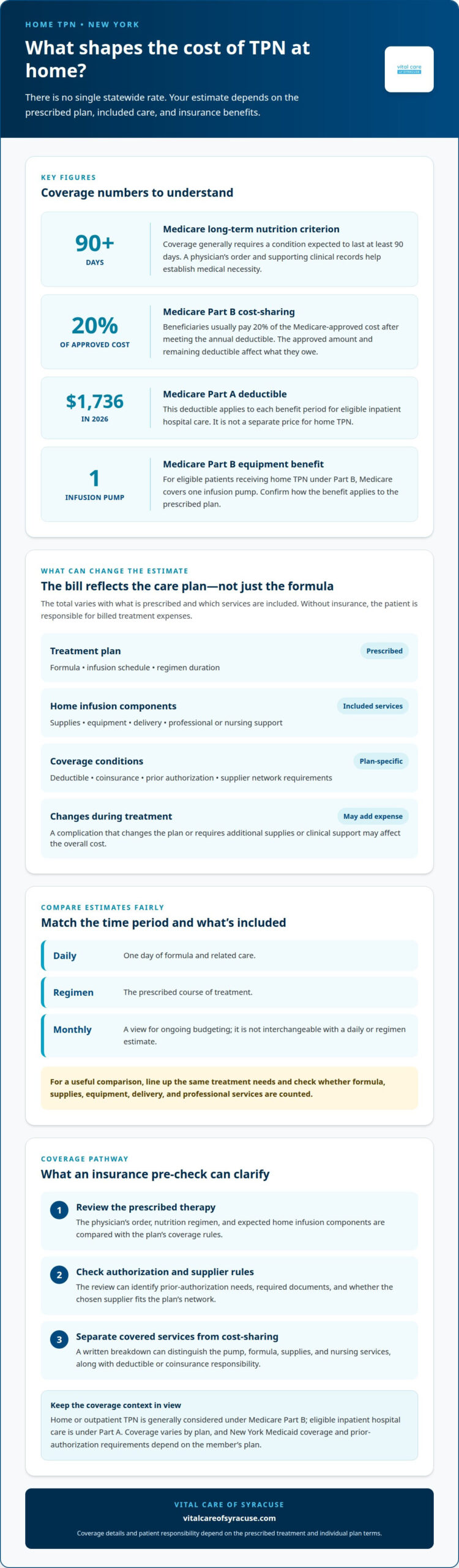
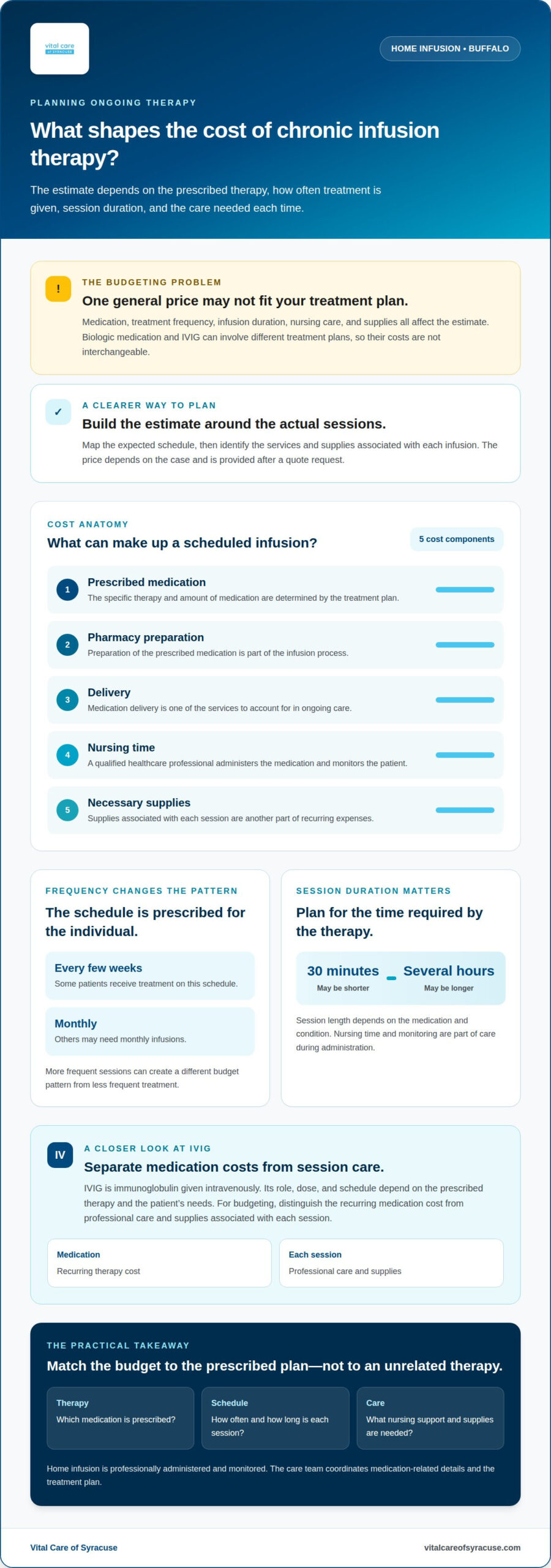
The price depends on the case and is provided after a quote request; factors include therapy type, prescribed supplies, clinical services, and insurance coverage. Costs can differ because treatment plans and coverage vary. Vital Care of Syracuse assists with insurance verification, prior authorizations, and reimbursement coordination. Coverage varies by insurance plan and therapy type, so the estimate reflects the patient’s care and benefits.
Does insurance cover home infusion supplies and delivery?
Coverage varies by insurance plan and therapy type, so benefits for one treatment don’t establish coverage for another. The prescribed medication, related supplies, and clinical services can affect how a plan processes care. Vital Care of Syracuse assists with insurance verification and prior authorizations, helping patients understand the steps involved before treatment proceeds. Reimbursement depends on the applicable plan and therapy.
How are refrigerated or temperature-sensitive infusion supplies shipped?
The infusion provider coordinates delivery according to the medication’s handling requirements; there isn’t one method for every therapy. After delivery, follow the specific storage instructions on the medication label and any accompanying guidance. If the package appears inconsistent with those instructions, contact the provider before using the medication. This keeps handling decisions specific to the prescribed product rather than based on general assumptions.
Leave a Reply