



Hospital discharge doesn’t always mean infection treatment is finished. For some patients in Binghamton, home infusion for post-surgical infections can continue prescribed IV anti-infective treatment at home when it suits the patient’s condition and care plan.
It’s understandable to want clear answers about whether home treatment is suitable, what support it involves, and how care is arranged after a hospital stay. This article explains how the care team assesses suitability, plans infusion care, and coordinates referrals before discharge, so you can understand what to expect.
You’ll also learn what treatment at home involves and when another care setting may be more appropriate. With a clear plan and clinical oversight, patients and caregivers can approach the next stage of recovery with greater confidence.
Key Takeaways
- Understand how the prescribed anti-infective treatment, infusion plan, and clinical needs shape care at home.
- Learn which practical and clinical factors are considered when planning home infusion after surgery.
- See how medication-history reviews and infusion-rate adjustments can support treatment planning and monitoring.
- Follow the referral process from hospital discharge planning through coordination of home treatment.
- Review how coverage, care requirements, and the support available from Vital Care of Syracuse fit into the next steps.
Infusion therapy for infections and medical conditions
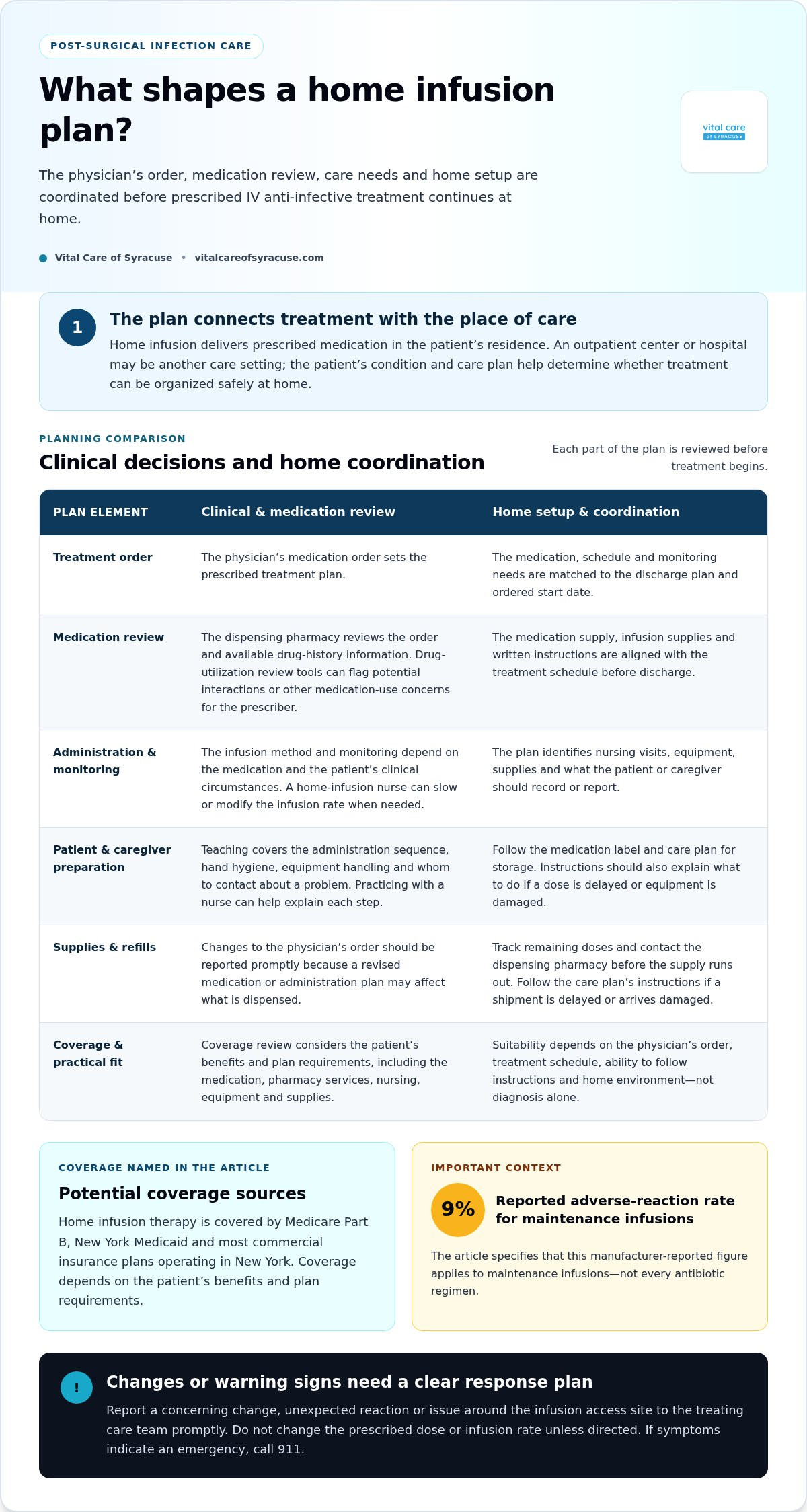
For patients in Binghamton, home infusion for post-surgical infections can continue prescribed anti-infective treatment after discharge. The plan connects the physician’s medication order with pharmacy review, safe administration, and clear patient instructions.
Home Anti-Infective Medication Infusions
Home infusion delivers prescribed anti-infective medication through an infusion device or vascular access, according to the physician’s treatment plan. The medication, schedule, and monitoring needs depend on the infection and the patient’s clinical circumstances.
Before treatment begins, the dispensing pharmacy reviews the medication order and available drug-history information. Specialty pharmacies can use drug-utilization review tools to flag potential interactions or other medication-use concerns for the prescriber. This review helps build a more complete picture of the patient’s therapy.
During administration, a home-infusion nurse can slow or modify the infusion rate when needed. Manufacturer drug information reports a 9% adverse-reaction rate for maintenance infusions; that figure applies to maintenance infusions, not every antibiotic regimen.
Patient Education and Medication Storage
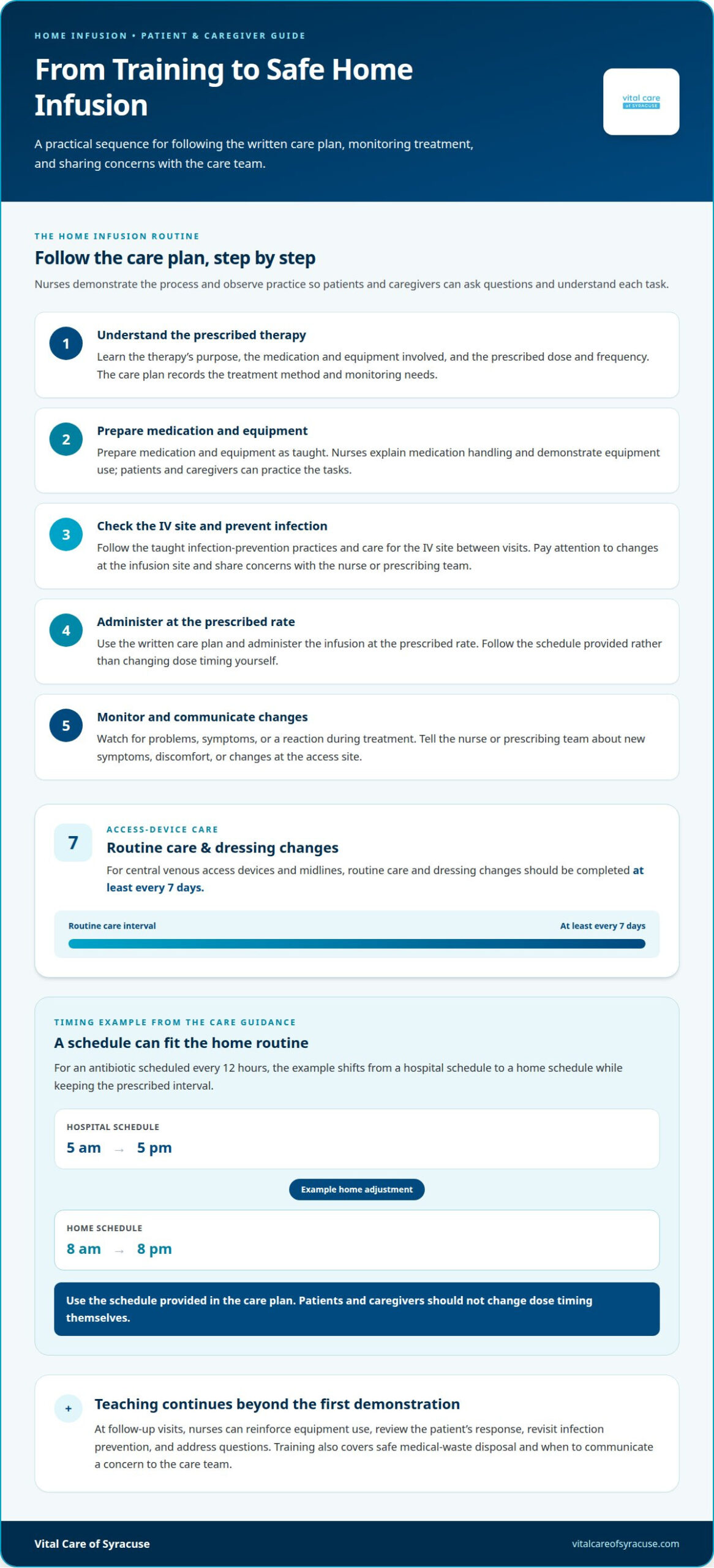
Before the first dose, patients and caregivers need clear instructions for the medication and infusion equipment. Teaching should cover the administration sequence, hand hygiene, equipment handling, and whom to contact about a problem. Practicing the steps with a nurse can help patients understand each part before managing an infusion independently.
Follow the storage instructions on the medication label and in the care plan. Some medications require refrigeration, while others have different handling directions, so don’t assume one rule applies to every drug. Keep medication and supplies organized, and review the label before each administration.
The teaching plan should also explain what to do if a dose is delayed or equipment is damaged. Don’t change the prescribed dose or infusion rate on your own.
Medication Delivery and Refills
Delivery planning connects the medication supply to the prescribed schedule and discharge plan. Before leaving the hospital, confirm that the first shipment, infusion supplies, and written instructions align with the ordered start date. A clear plan helps prevent confusion about which medication to use and when.
For refills, track the remaining doses and contact the dispensing pharmacy before the supply runs out. The pharmacy can coordinate the next shipment with the active prescription and treatment schedule. Report changes to the physician’s order promptly, as a revised medication or administration plan may affect what is dispensed.
Keep delivery instructions accessible to the patient or caregiver. If a shipment is delayed or arrives with damaged packaging, follow the care plan’s contact instructions rather than improvising with another medication or supply.
Complication Risks and Warning Signs
Potential complications include an unexpected medication reaction, an issue with infusion access, or worsening infection symptoms. Warning signs may include a new or worsening change during treatment, an unusual reaction after administration, or a noticeable change around the access site. The patient’s written instructions should explain how to report these concerns.
Contact the treating care team promptly about a concerning change so it can be assessed alongside the medication and infusion plan. Don’t adjust the dose or rate unless the care team directs you to. Home-infusion nurses can slow or modify the rate when needed as part of clinical management.
If symptoms indicate an emergency, call 911. Patients and caregivers should keep that instruction with the infusion plan, so the response is clear when urgent help is needed.
Home infusion eligibility and care planning
Home treatment is planned around the prescribed therapy, the patient’s condition, and the support needed for safe administration. The physician, pharmacy, and nursing team coordinate the details before care moves home.
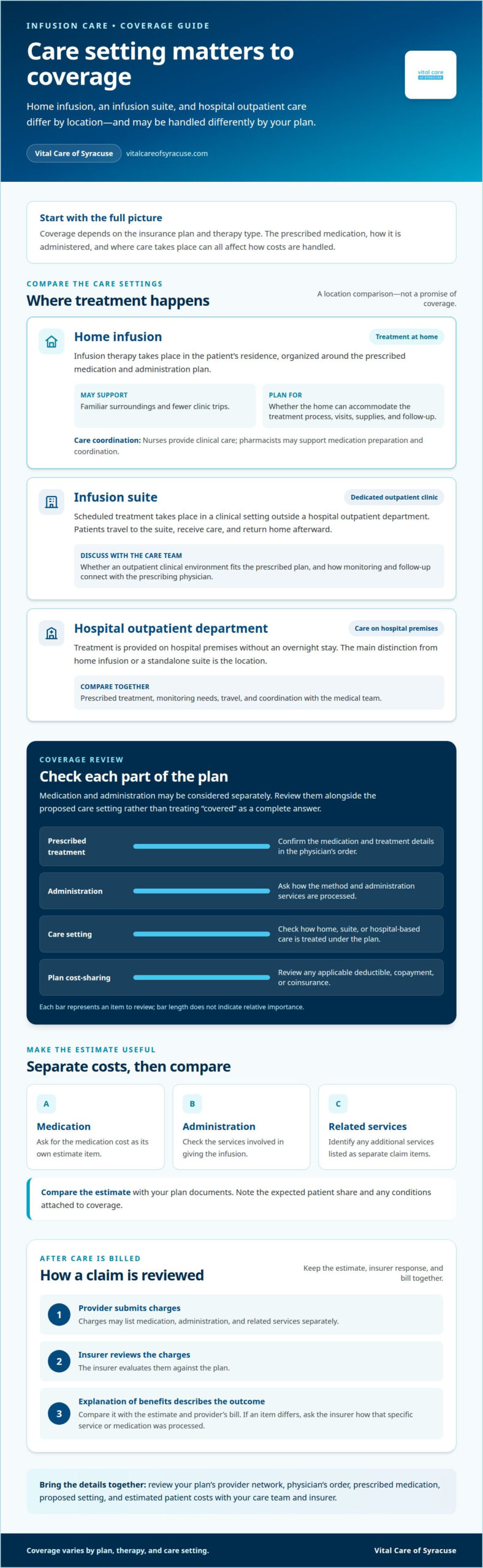
With home infusion, medication is administered in the patient’s residence rather than at an outpatient center or hospital. The setting affects how visits, equipment, and monitoring are arranged, while the prescribed treatment remains central to the plan.
Home infusion therapy is covered by Medicare Part B, New York Medicaid, and most commercial insurance plans operating in New York. For antibiotic treatment, coverage review should account for the medication and the services or supplies included in the individual plan.
Nursing visits, equipment, and monitoring depend on the medication, infusion method, and patient’s care needs. The plan identifies which tasks require a nurse, what equipment and supplies are needed, and how the patient or caregiver should record concerns.
Suitability depends on practical details, not diagnosis alone. The physician’s order, treatment schedule, the patient’s ability to follow instructions, and the home environment all help determine whether care can be organized safely outside a facility.
Insurance and Medicare Coverage
Coverage for home infusion therapy can depend on a patient’s insurance benefits and plan requirements. Coverage review should identify how the prescribed medication, pharmacy services, nursing, equipment, and supplies fit the patient’s benefits.
Before treatment begins, gather the insurance details, physician’s order, medication plan, and expected care schedule. These details help the pharmacy coordinate billing and identify which parts of treatment require authorization or other plan steps. A clear review can prevent confusion about coverage responsibilities during therapy.
Nursing Visits, Equipment, and Monitoring
The care plan outlines whether nursing visits are needed for medication administration, instruction, or assessment. It also identifies the equipment and supplies required for the prescribed method, such as a pump and tubing when the order calls for them. The specific setup follows the medication and physician’s instructions.
Monitoring instructions should explain what the patient or caregiver tracks between visits, how to record each administration, and whom to contact about a concern. At the planning appointment, review the written schedule, demonstrate the equipment steps, and confirm that the patient can follow the instructions. If home infusion care is being considered, home infusion care planning can be a useful next step.
Infusion treatment for infections and other diagnoses
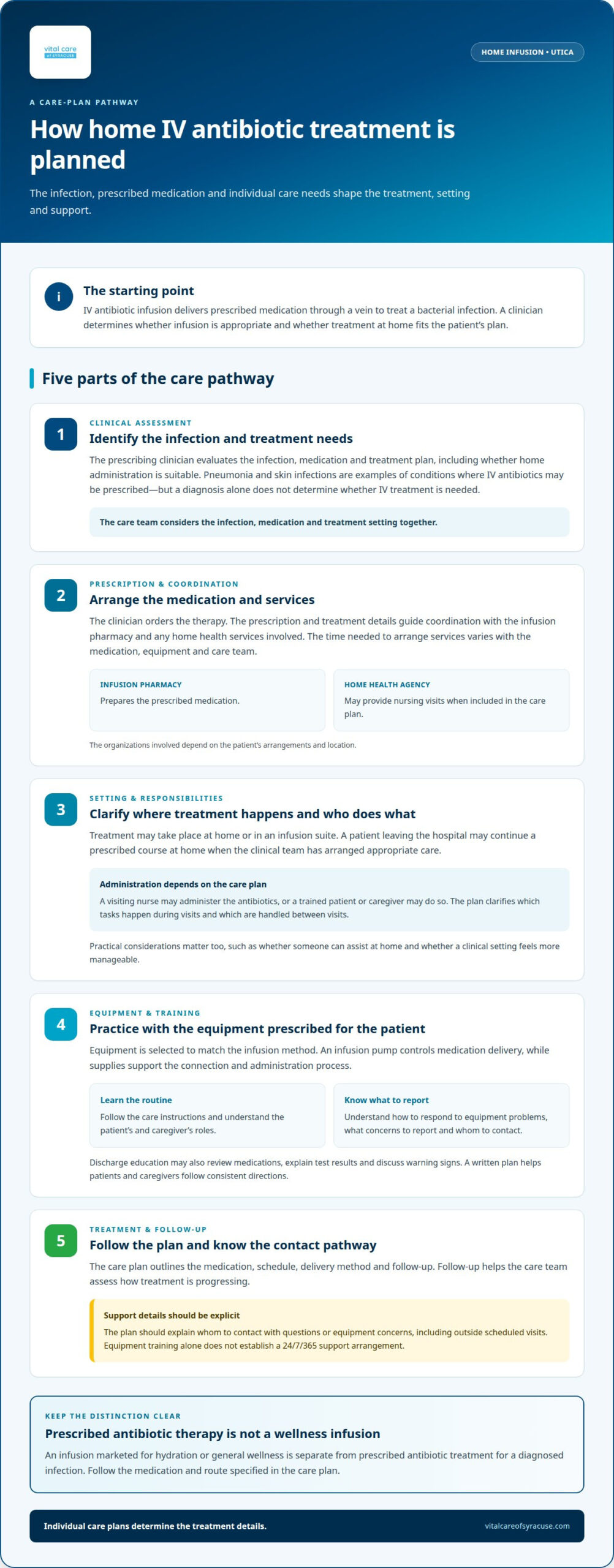
Infusion treatment is selected for a specific diagnosis, medication order, and administration plan. For a post-surgical infection, the physician determines whether an intravenous anti-infective is appropriate and sets the course of treatment. The pharmacy coordinates the medication with the discharge plan, while nurses support administration and communicate relevant changes.
Different diagnoses call for different infusion products, schedules, and monitoring. Diagnosis alone doesn’t establish which treatment is suitable; the prescribed medication and the patient’s clinical needs shape the plan. For example, anti-infective therapy requires instructions specific to that medication, while another infusion treatment may need different supplies or administration procedures.
Coordination matters because treatment involves several connected steps. The physician provides the order and clinical information, the pharmacy reviews the prescription and coordinates dispensing, and the nursing team addresses administration needs. Patients can help by keeping an accurate medication list and promptly sharing treatment-plan changes with the care team.
Authorization and coverage are separate from clinical suitability. The treatment plan identifies the prescribed drug and services involved; the insurer reviews the applicable benefit requirements. Patients can support that review by providing current insurance details and ensuring the physician’s order matches the intended therapy.
Familiar surroundings can make treatment at home more comfortable, but practical details still matter. The patient needs a suitable place for administration, access to required supplies, and instructions that fit their daily routine. Nurses can explain the infusion process and clarify which steps patients perform themselves and which require clinical support.
Before treatment starts, patients and caregivers can use this short preparation list:
- Keep the physician’s medication order and current medication list together.
- Confirm the pharmacy has the correct prescription and delivery instructions.
- Set aside the supplies and a clean, comfortable place for administration.
- Record questions about the schedule, equipment, or instructions for the care team.
For home infusion for post-surgical infections in Binghamton, these steps connect the treatment decision with pharmacy coordination and practical administration at home. They also clarify who is responsible for each part of care, from the physician’s order to the patient’s daily routine.
Before an appointment, take scheduled medications and eat unless your provider directs otherwise. Follow the provider’s instructions if they differ.
Home-infusion reimbursement rates are typically 40% to 60% lower than rates in other outpatient settings. This comparison concerns reimbursement rates for home infusion and other outpatient settings.
Home infusion after hospital discharge
After surgery, the discharge plan should connect the physician’s treatment order with the first steps for home infusion. The doctor identifies the medication and schedule, while the patient needs clear instructions for supplies, administration, and follow-up. For patients in Binghamton, organizing these details before leaving the hospital makes the transition easier to follow.
Home infusion involves coordination among the discharging hospital, prescribing physician, pharmacy, nursing team, and patient. Each handoff should include practical information such as the current medication list, known allergies, infusion access details, and prescribed schedule. If the treatment order changes before discharge, the updated instructions should guide dispensing and administration.
Use the discharge conversation to clarify what happens next. Ask who will explain the medication, how the first delivery aligns with the prescribed start, and which contact route to use for non-emergency questions. Confirm which supplies should arrive with the medication and where to keep the written care plan.
The route matters. Intravenous anti-infective treatment enters through vascular access, while enteral therapy uses the digestive tract. If the discharge paperwork mentions both routes or several medications, ask the care team which instructions apply to each treatment. Keeping instructions separate and clearly labeled can help prevent confusion during recovery from surgery.
Before leaving the hospital, patients and caregivers can review these handoff details with the clinical team:
- The physician’s current medication order and administration schedule.
- The pharmacy’s delivery plan and the supplies needed for the first dose.
- The nursing plan, including any teaching or assessment visit.
- The written instructions for recording doses and reporting changes.
- The follow-up plan for communicating treatment updates to the doctor.
At home, choose a clean, comfortable place where the patient can follow the prescribed steps without rushing. Keep medication, supplies, and instructions together, and record each administration as directed. If a physician changes the medication or schedule, follow the updated plan rather than relying on an earlier copy.
Discharge planning can identify practical barriers before they interrupt treatment. A caregiver may need instruction, someone may need to receive a delivery, or the patient may need the written schedule in larger print. Raising these needs with the hospital team helps address them as part of the transition.
For home infusion for post-surgical infections in Binghamton, a clear handoff connects the hospital’s clinical plan to medication delivery and care at home. Keep discharge paperwork accessible and use it to follow the treatment plan through recovery.
Home infusion eligibility and referral
For a post-surgical infection, a referral connects the surgeon’s treatment plan with the pharmacy and home infusion team. In Binghamton, the treating hospital and physician begin the process by sending the prescription and relevant clinical details.
Which Binghamton-area providers offer home infusion therapy for post-surgical infections? A suitable provider coordinates prescribed anti-infective treatment, medication delivery, and the clinical support required by the care plan. The referral should match the physician’s order, the patient’s needs, and the services required for administration at home.
What local hospitals and surgeons coordinate post-surgical home infusion in Broome County? The surgeon and discharge team at the hospital treating the patient coordinate the referral, sharing the treatment order and discharge information with the home infusion provider. The specific care team depends on where the surgery and discharge take place.
A referral typically needs the medication order, diagnosis, relevant clinical notes, current medication list, and discharge timing. These details help the pharmacy review the treatment and plan delivery. Patients can assist by sharing accurate insurance information and identifying any caregiver who may need instructions.
Prior authorization may be part of the coverage process if an insurance plan requires review before treatment. The physician’s office and pharmacy coordinate the information needed, including the prescribed medication and supporting clinical details. Keep authorization updates and delivery plans with the discharge paperwork.
Suitability depends on more than the diagnosis. The team considers the treatment order, the patient’s clinical needs, the home setting, and whether the patient or caregiver can follow the administration instructions. A separate chronic condition may also affect coordination if it changes medications or care needs.
To keep a referral moving, patients and caregivers can prepare:
- The surgeon’s current order and hospital discharge documents.
- An accurate list of medications and known allergies.
- Insurance details and any prior authorization updates.
- A delivery address and instructions for receiving medication.
- Questions about supplies, caregiver teaching, and the first administration.
Nutrition needs may also matter if the patient has a separate prescribed therapy, such as parenteral nutrition. Sharing this information helps the care team coordinate distinct treatment plans without confusing their instructions or supplies.
For help coordinating a home infusion referral, start a home infusion referral with the relevant discharge and prescription details ready. This gives the care team a practical starting point for reviewing the prescribed treatment and arranging next steps.
The surgeon and discharge team at the hospital where the patient has surgery arrange the referral with the home infusion provider. The specific team depends on the hospital involved.
Vital Care of Syracuse: Anti-infective Therapy
Vital Care of Syracuse provides Anti-infective Therapy for patients whose prescribed treatment may continue at home after surgery. It’s a relevant next step when a physician has ordered infusion-based infection treatment and discharge planning includes home administration.
Care planning connects the prescription with medication coordination and the patient’s treatment needs. Patients and caregivers can discuss the physician’s order, administration instructions, and questions about the transition from hospital to home. Vital Care of Syracuse also provides Immunoglobulin (IVIG/SCIG), Parenteral Nutrition (TPN), and Hemophilia and Bleeding Disorder Therapy for other prescribed clinical needs.
If you’re considering home anti-infective treatment after discharge, contact Vital Care of Syracuse to discuss the referral and care-planning process.
Take the Next Step in Your Recovery Plan
Planning home infusion for post-surgical infections in Binghamton can start with a focused conversation about the prescribed treatment and transition home. Keep your discharge instructions and medication list nearby so you can discuss your needs and care plan clearly.
Vital Care of Syracuse offers Anti-infective Therapy, as well as Immunoglobulin (IVIG/SCIG) and Parenteral Nutrition (TPN) for other clinical needs. If you’re preparing for home treatment after surgery, discussing the referral process can clarify how to move from the physician’s order toward coordinated care.
Contact Vital Care of Syracuse to discuss home infusion and your next steps. A clear conversation can help you approach recovery with greater confidence and a better understanding of the care plan.
Frequently Asked Questions
What antibiotics are commonly given by home infusion for post-surgical infections?
There isn’t one standard antibiotic for every post-surgical infection; the prescription depends on the infection and clinical findings. The physician considers factors such as culture results, suspected bacteria, the surgical site, medication allergies, and prior treatment. The pharmacy dispenses the medication specified in the order. Ask your care team what the antibiotic targets and how to follow its administration instructions.
What criteria must patients meet to receive IV antibiotics at home after surgery?
Home IV antibiotic treatment requires a physician’s prescription and a care plan that addresses the patient’s clinical needs, medication administration, and monitoring. The team also considers whether the patient or caregiver can follow instructions, whether the home setting supports treatment, and what nursing support is needed. The infusion provider coordinates with the prescribing physician and insurance plan to assess suitability and coverage.
How is a home infusion referral arranged after surgery in the Binghamton area?
The surgeon or hospital discharge team can initiate a referral by sending the prescription and relevant clinical details to a home infusion provider. To support coordination, keep your medication list, allergy information, insurance details, and discharge instructions available. The provider works with the physician and pharmacy on treatment planning, coverage review, and medication delivery, while the patient’s care team clarifies next steps before discharge.
Which Binghamton-area providers offer home infusion therapy for post-surgical infections?
Vital Care of Syracuse provides anti-infective therapy as part of its infusion services.
Leave a Reply