


The referral is only one part of arranging infusion therapy at home. For home infusion for GBS patients in Syracuse, the treating team’s order and the health plan’s requirements both shape the next steps; health plans commonly require prior authorization for these therapies. Whether a separate referral is needed depends on the plan and care pathway.
It’s understandable to want a clear answer while treatment decisions are being made. Guillain-Barré syndrome can progress over days to weeks, and severe cases may require hospital care. Home infusion is not appropriate for every stage of care, so the treating team must determine whether home treatment is suitable.
This guide explains how referrals and authorization fit into the process, what nursing and pharmacy support at home can involve, and what coverage questions to expect. It also outlines how IVIG may be considered for GBS and how a home infusion provider can coordinate prescribed care, helping you prepare for the next conversation.
Key Takeaways
- Learn what usually starts the home infusion process and how to clarify whether a referral is needed for your care pathway.
- Understand how nursing oversight and pharmacy coordination can support prescribed infusion therapy at home.
- See what health plans may require before coverage begins, including prior authorization and supporting clinical information.
- Find out when home infusion may fit into GBS care and what to discuss with the treating team about the next steps.
Home infusion nursing and monitoring
For Guillain-Barré syndrome (GBS), the right treatment setting depends on the patient’s condition. Weakness and unusual sensations often progress from the feet and legs toward the arms and upper body over days to weeks. Severe GBS can affect breathing or cause paralysis, requiring hospital care and sometimes mechanical ventilation. Home care cannot replace hospital treatment when that level of support is needed.
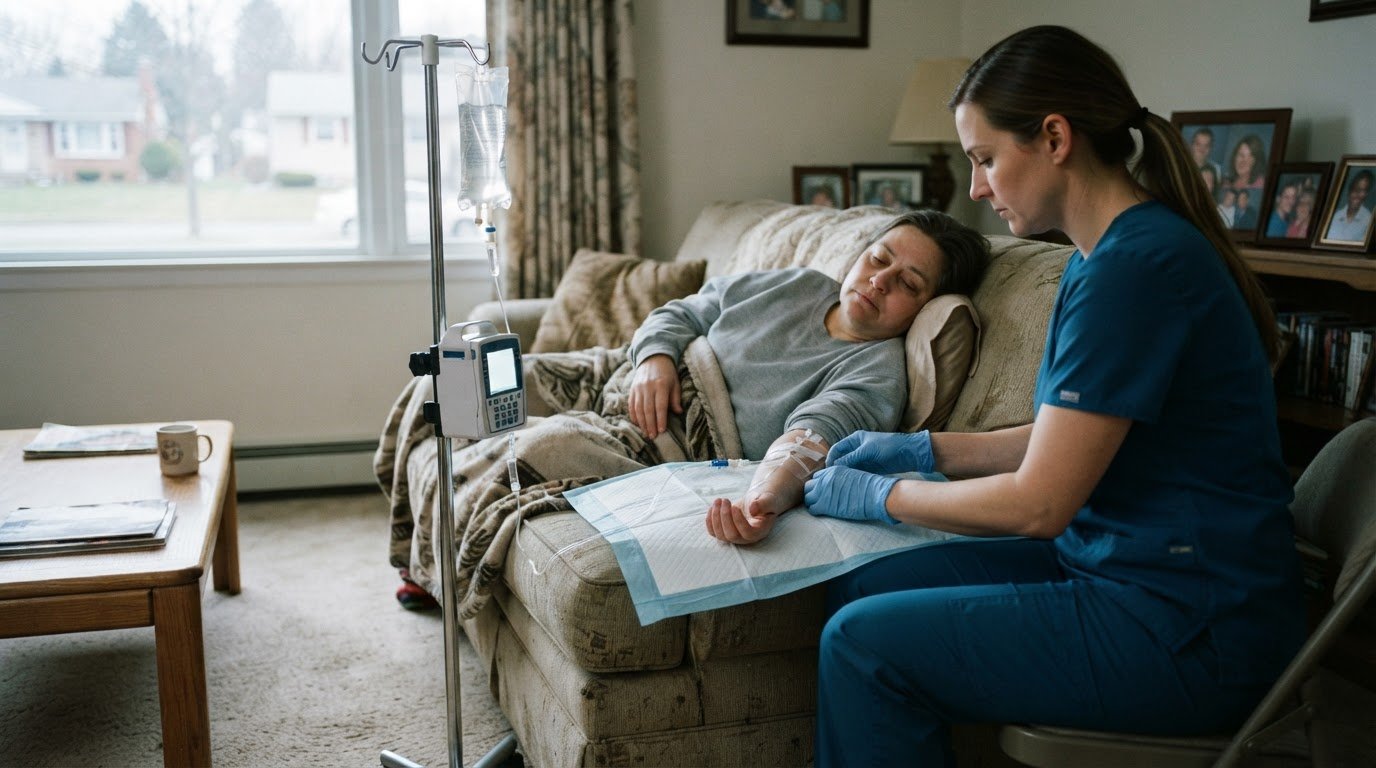
Home IVIG and hospital or outpatient IVIG use the same prescribed therapy in different care settings. At home, a licensed nurse administers the infusion and monitors vital signs and possible adverse reactions. Hospitals can provide care for severe complications, including breathing problems. The treating team considers the patient’s condition when deciding whether home treatment is suitable.
IVIG for GBS is used off-label and is not FDA-approved for this disease. IVIG or plasma exchange is usually started promptly after diagnosis. The treatment and setting are determined as part of the clinical plan, based on the diagnosis and the patient’s needs.
Syracuse hospitals and neurology clinics may help arrange home IVIG after diagnosis or discharge. The treating neurologist or hospital discharge team is a practical starting point for coordinating a referral, treatment order, and clinical information with a home infusion provider. The care team also determines whether home therapy suits the patient’s condition.
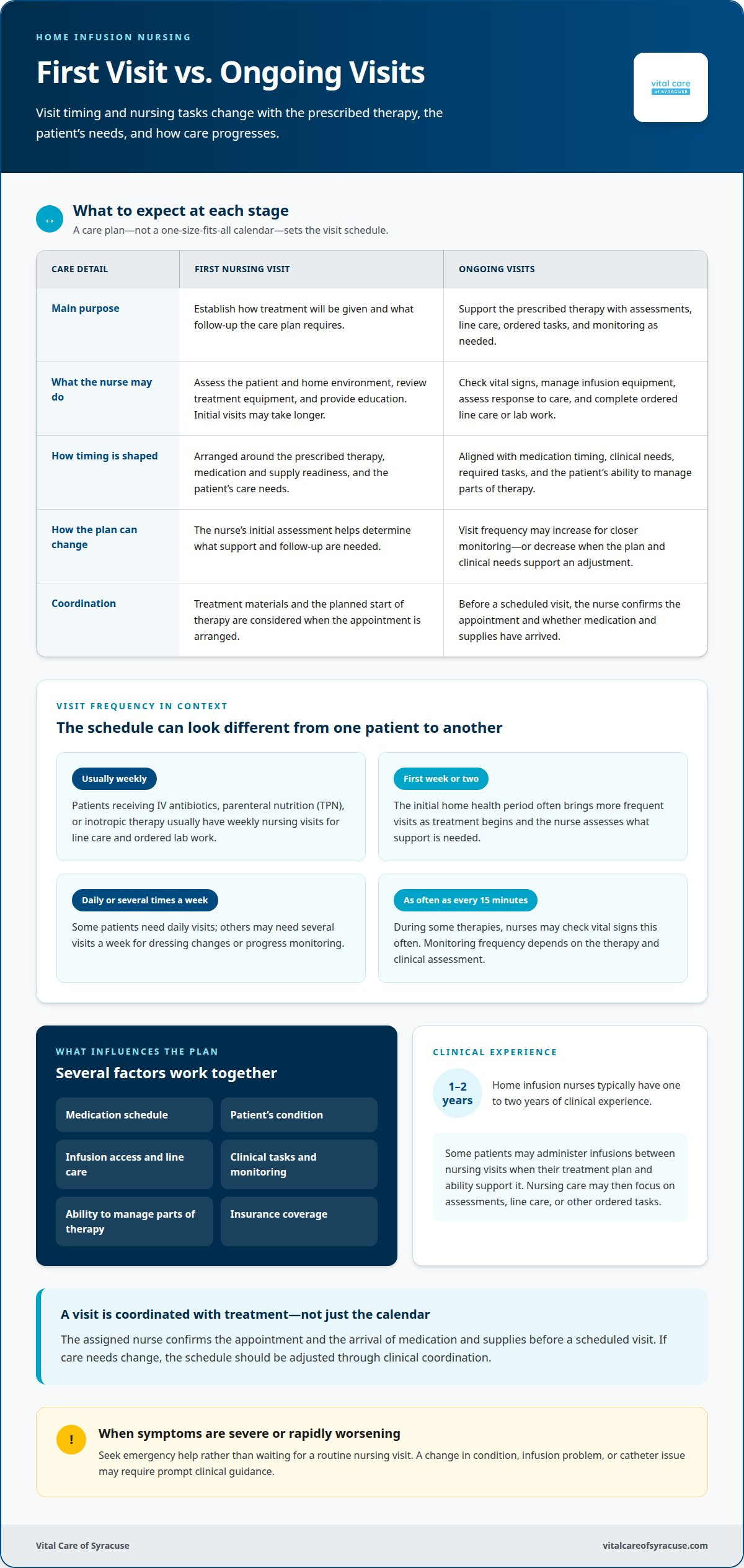
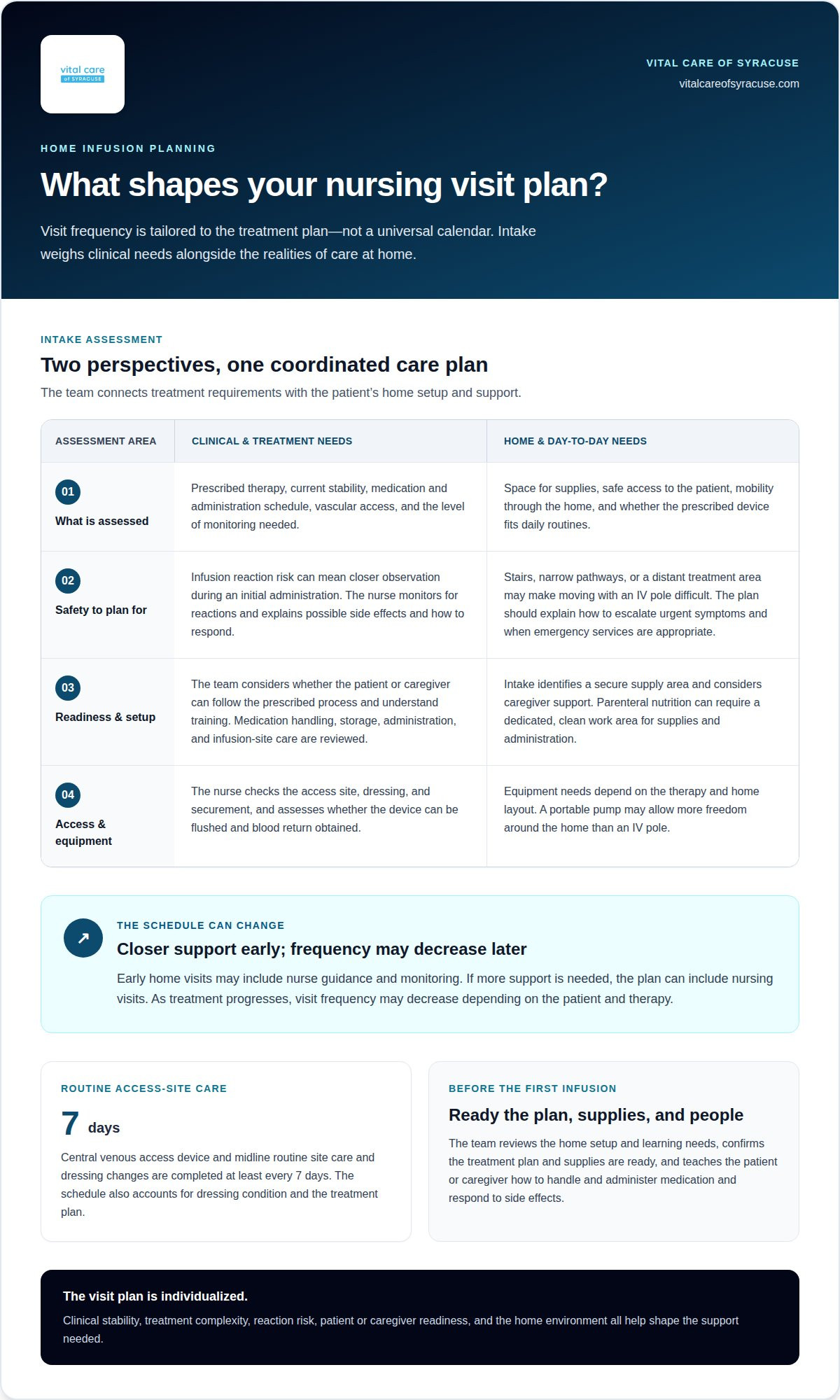
Once a home plan is in place, the provider coordinates the medication and nursing visit according to the prescriber’s instructions. The nurse administers the prescribed infusion and monitors vital signs and possible adverse reactions during care. This monitoring gives the clinical team information about how the patient is tolerating therapy, but it does not replace hospital assessment when severe symptoms require a higher level of care.
Home infusion nursing and pharmacy therapies
Home infusion therapy depends on coordinated pharmacy and nursing roles. The prescriber’s order guides the medication and how the therapy is delivered. Pharmacy coordination connects the prescribed treatment with the nursing plan, helping keep medication details and infusion arrangements aligned.
With intravenous therapy, medication enters a vein through the prescribed infusion method. The pharmacy team coordinates the medication, while the nurse administers the infusion and monitors the patient. The schedule and nursing plan depend on the prescription and clinical needs. The team can also coordinate changes when the prescriber updates the treatment plan.
Before a home visit, the care team follows the prescribed therapy instructions, which guide the medication, infusion schedule, and nursing care. The nurse follows the order and observes the patient’s response during the visit. If a concern arises, the nurse can communicate it to the appropriate clinical team, connecting the home visit with the treatment plan.
Clear communication matters at every step. A changed order, delayed delivery, or new concern can affect coordination between pharmacy and nursing teams. The team needs current prescription details and a clear way to share updates. For example, if the prescriber adjusts an infusion instruction, the pharmacy and nurse need the revised order before following it.
For GBS, the prescribed therapy and home arrangements should follow the treating team’s plan. Pharmacy and nursing coordination supports the practical delivery of infusion therapy, but it doesn’t replace decisions about diagnosis or treatment. A specialty home infusion team can help coordinate the medication and nursing components of an approved home plan. Learn about specialty home infusion support as you consider the practical steps involved.
Insurance coverage and prior authorization
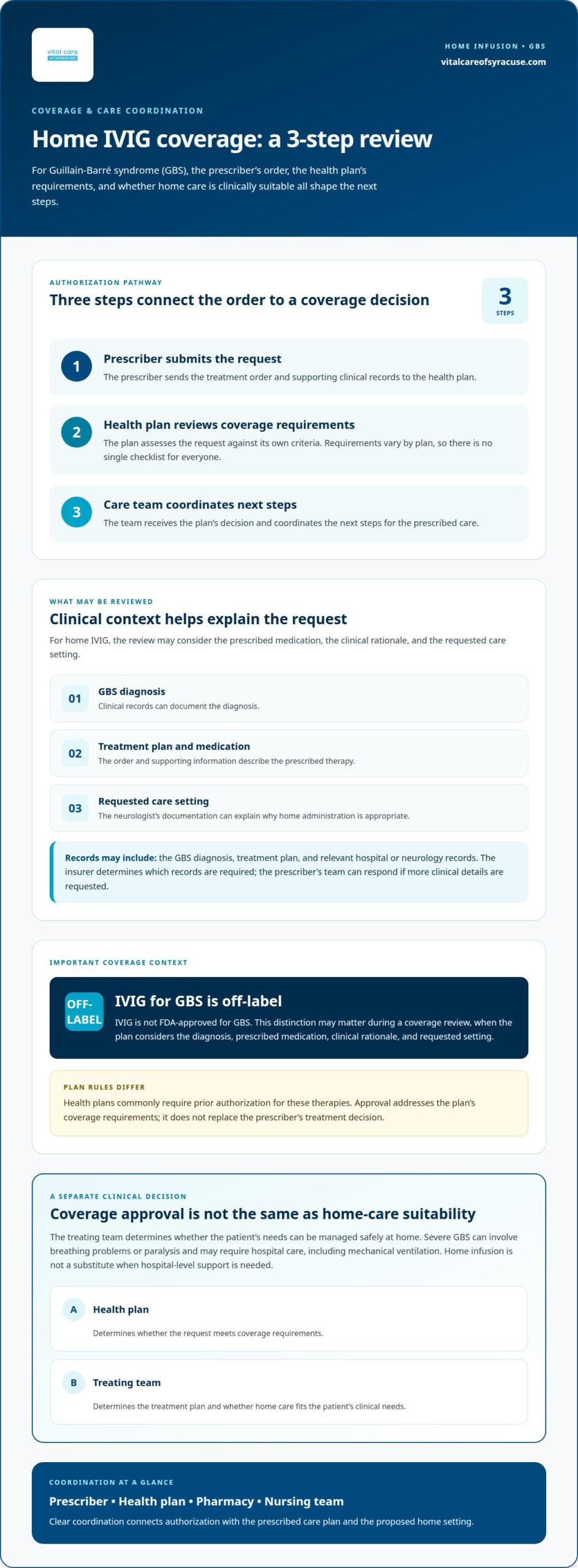
Health plans commonly require prior authorization for these therapies. For home IVIG for GBS, the review may involve the prescriber’s treatment order, the plan’s coverage criteria, and whether home care suits the patient’s condition. Requirements vary by plan, so there is no single checklist for everyone.
IVIG is used off-label for GBS and is not FDA-approved for this disease. That distinction may matter during a coverage review. The plan may assess the diagnosis, prescribed medication, clinical rationale, and requested care setting. The neurologist’s documentation can explain why IVIG is prescribed and why home administration is appropriate.
The authorization process typically follows a practical sequence:
- The prescriber submits the treatment order and supporting clinical records.
- The health plan reviews the request against its coverage requirements.
- The care team receives the plan’s decision and coordinates next steps.
Documentation may include the GBS diagnosis, treatment plan, and relevant hospital or neurology records. The insurer determines which records are required. Clear information about the medication and proposed setting can support the review. If the plan requests more clinical details, the prescriber’s team can respond with information supporting the request.
Medical suitability is separate from insurance approval. Severe GBS can involve breathing problems or paralysis that require hospital care, including mechanical ventilation. Home infusion is appropriate only when the patient’s clinical needs can be managed safely at home. A comfortable home setting alone does not establish medical eligibility.
Before therapy begins, the coverage decision should clarify whether authorization applies to the prescribed medication and home setting. Approval addresses the plan’s coverage requirements; it does not replace the prescriber’s treatment decision. For home infusion for GBS patients in Syracuse, coordination among the prescriber, health plan, pharmacy, and nursing team helps connect authorization with the care plan.
Which home infusion providers serve Guillain-Barré syndrome patients in Syracuse, New York?
For Syracuse patients, the appropriate provider is one that can coordinate the prescribed home infusion plan. The treating neurologist or hospital team can connect discharge planning with home care arrangements. The provider coordinates the ordered medication and nursing care, while the prescriber decides whether IVIG is appropriate for GBS.
Start by identifying what the prescribed plan requires. For example, an order may call for intravenous medication, nursing administration, and communication with the neurology team. These details help determine how a home infusion provider can support the plan. The provider also needs the clinical order and relevant care information to coordinate the service.
When the care team considers a provider, practical coordination points include:
- Whether the provider can arrange the medication specified in the prescription.
- How nursing administration and monitoring fit the home treatment plan.
- How the provider coordinates with the prescriber and health plan.
- What clinical records and treatment instructions are needed to begin coordination.
These points matter because GBS treatment needs can change. A patient discharged from the hospital may have a different plan from someone receiving outpatient care. The neurologist’s instructions, the patient’s condition, and the health plan’s authorization process all shape home arrangements. If breathing problems or other severe symptoms require hospital care, home infusion cannot replace that level of treatment.
To move from a treatment decision to home arrangements, the care team can share the prescription and relevant clinical information with a home infusion provider. This gives the provider a basis for coordinating medication and nursing details with the prescriber. For help taking the next step, start a home infusion inquiry about the prescribed care plan.
Vital Care of Syracuse: Home infusion
Vital Care of Syracuse provides home infusion services for prescribed therapy. If the treating team determines that home care is appropriate, Vital Care can coordinate infusion arrangements alongside the clinical plan. Its offerings include immunoglobulin (IVIG/SCIG), anti-infective therapy, and parenteral nutrition (TPN).
For GBS, the neurologist or prescriber directs treatment decisions and provides the order. Home infusion coordination supports the prescribed medication and care plan; it cannot replace hospital care when severe symptoms require it. Coverage requirements, clinical information, and authorization may also shape the process.
Contact Vital Care of Syracuse to discuss home infusion coordination for a prescribed care plan.
Take the next step with a coordinated care plan
Planning home infusion for GBS patients in Syracuse can start with a focused conversation about how the prescribed plan will move forward. The treating team and infusion provider can work from the same treatment order and clarify practical arrangements, helping the patient and family understand the next steps. Keeping the discussion centered on the individual’s current care plan can make complex decisions easier to follow.
Before that conversation, consider what still needs clarification: who coordinates the infusion, how the plan connects with the prescriber, and which insurance steps remain. These questions keep the discussion focused on the patient instead of overwhelming the family with general information.
For support with a prescribed home infusion plan, contact Vital Care of Syracuse. A clear next step can help you move forward with greater confidence and care.
Frequently Asked Questions
Do I need a referral for infusion therapy?
Home infusion requires a prescribed treatment plan, and referral steps depend on the care pathway and health plan. For GBS, the treating neurologist or hospital team can provide the order and clinical information needed to coordinate therapy. For example, after discharge, the team can connect the prescription with home infusion arrangements and any required insurance review.
What is home infusion?
Home infusion is medication therapy delivered at home through an IV or injection under professional supervision. It may be considered when the prescribed medication is suitable for home care and the patient’s clinical needs support that setting. Depending on the treatment plan, care may involve a nursing visit, medication coordination, supplies, and caregiver training.
What should I do if I have a reaction during an infusion?
Tell the visiting nurse immediately if you notice a possible reaction during an infusion. The nurse can assess what is happening, monitor your condition, and follow the clinical plan. Do not change the medication or infusion instructions on your own. If symptoms are severe or include difficulty breathing, seek emergency medical care rather than waiting for a routine follow-up.
Does Medicare or New York Medicaid cover home IVIG for Guillain-Barré syndrome?
Coverage depends on the person’s plan, prescribed treatment, and review requirements. IVIG for GBS is used off-label, which may be relevant to the insurer’s assessment, and health plans commonly require prior authorization for these therapies. The care team can help clarify coverage and authorization steps before treatment proceeds. A coverage decision is separate from the prescriber’s clinical decision.
What nursing, pharmacy, and neurologist services are included with home IVIG infusion?
Home IVIG involves coordinated care, not a replacement neurologist at home. A specialty infusion provider coordinates medication and nursing arrangements with the prescriber. The nurse administers the prescribed therapy and monitors the patient, while the neurologist remains responsible for GBS treatment decisions and follow-up. For example, any change to the treatment order must come from the prescriber.
What are the risks and emergency warning signs during home IVIG infusion?
The nurse monitors for possible adverse reactions during the infusion, and patients should promptly report new symptoms. GBS can also affect breathing, and severe cases may require hospital care, including mechanical ventilation. Difficulty breathing or rapidly worsening weakness or paralysis requires urgent medical assessment. Home infusion cannot replace hospital care when severe symptoms arise.
Leave a Reply