



Home treatment can feel more manageable in familiar surroundings, but it can still bring stress or isolation. Emotional support for home infusion patients can come from attentive loved ones, practical help, and guidance from the care team. Together, these supports can help patients feel less alone as they adjust to treatment at home.
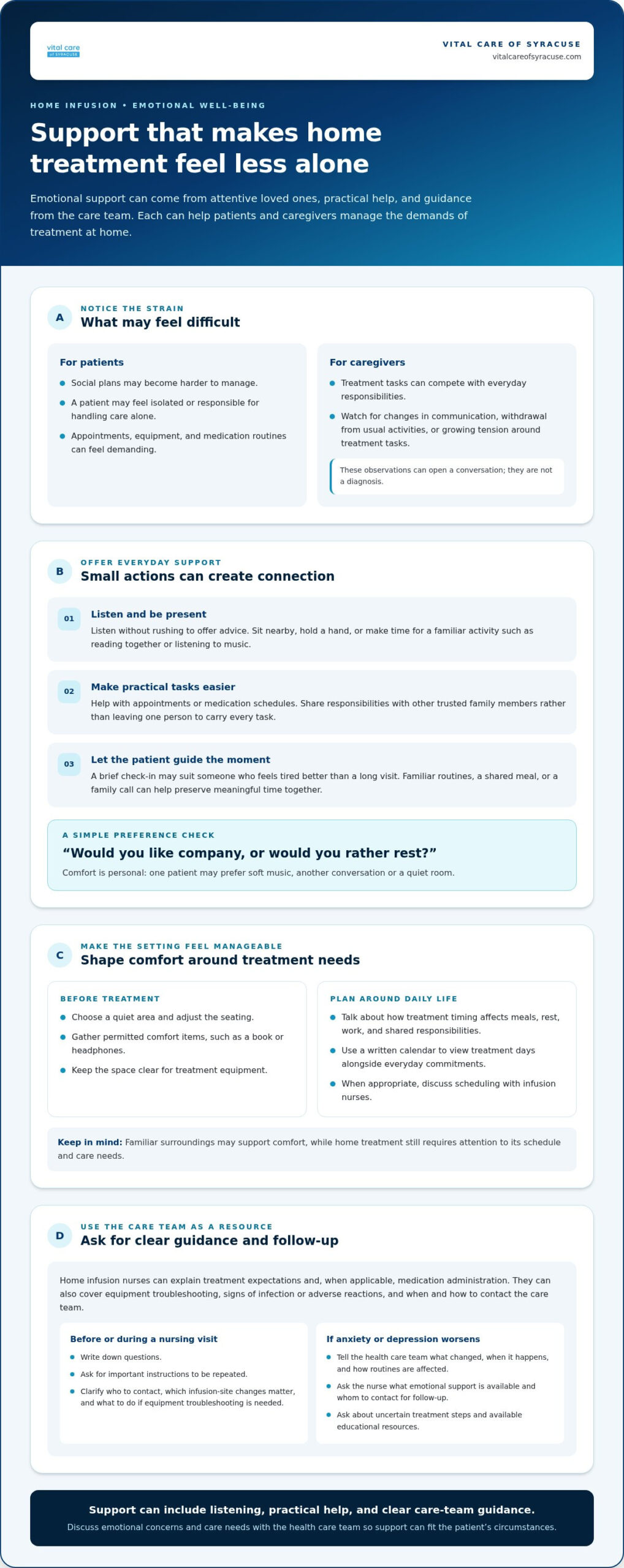
It’s understandable if treatment affects more than a patient’s physical health. Managing appointments, equipment, or medication routines can feel demanding, and family members who help with care may feel the strain too. Small gestures, such as listening without rushing to offer advice or simply sitting together, can make a difficult day feel less overwhelming.
This article explains how home infusion may affect emotional well-being and how a familiar setting and time with loved ones can offer comfort. It also looks at caregiver pressures, ways to recognize when more support could help, and how patients and families can consider their needs and available resources as part of the care experience.
Key Takeaways
- Notice how treatment responsibilities and feelings of isolation may affect patients and caregivers, and make room to talk about the strain.
- Offer practical support, such as helping with schedules, while also protecting time for rest and activities that bring comfort.
- Listening attentively and spending time together can help a loved one feel supported without pressure to offer advice.
- Consider how the home environment, personal preferences, and available support shape whether treatment at home feels manageable.
- Discuss emotional concerns and care needs with the health care team so the treatment plan and support can fit the patient’s circumstances.
Psychological stress, isolation, and caregiver burnout
Home infusion can ease some treatment demands, yet managing therapy at home may bring stress or isolation. Caregivers may also take on monitoring, medication, and equipment responsibilities alongside their usual routines.
Understanding the process and sharing responsibilities can make those demands easier to discuss.
To see how home treatment roles and clinical support can work together, watch this guide from Cleveland Clinic:
Caregiver Burden, Support, and Boundaries
Caregiver burden is the physical and emotional strain that can build when treatment duties compete with everyday responsibilities. Caregivers can support someone receiving infusion therapy by helping with appointments or medication schedules, listening without rushing to advise, and sitting nearby during treatment. Sharing tasks with other trusted family members can ease the pressure on one person.
Boundaries help make support sustainable. A caregiver might manage appointment reminders while reserving time for meals, sleep, or a needed break. Caregivers should look after their own health, seek emotional support, and ask the health care team about educational resources when treatment tasks feel difficult.
Nursing Education and Caregiver Training
Home infusion nurses explain treatment expectations, medication administration when applicable, equipment troubleshooting, and signs of infection or adverse reactions. They also explain when and how to contact the care team. This guidance helps families understand their roles instead of leaving them to interpret unfamiliar equipment alone.
Patients and caregivers can write down questions before a nursing visit and ask for important instructions to be repeated. For example, they can ask who to contact with a concern, which changes at the infusion site matter, and what to do if equipment troubleshooting is needed.
Recognizing Stress and Isolation
Patients may feel isolated when treatment routines make social plans harder or leave them feeling responsible for managing care alone. Caregivers can watch for changes in communication, withdrawal from usual activities, or growing tension around treatment tasks. These observations can start a conversation, but they are not a diagnosis.
Making time for a familiar activity, such as reading together or listening to music, can create connection without requiring a long conversation. Regular check-ins also give patients a simple opportunity to say what feels stressful.
Responding to Worsening Anxiety or Depression
If anxiety or depression worsens during home infusion therapy, patients should tell their health care team and describe what has changed, when it happens, and how treatment routines are affected. They can ask their home infusion nurse what emotional support is available, which concerns to share with the broader care team, and whom to contact for follow-up.
Patients can also ask the nurse to explain uncertain treatment steps and identify available educational resources. Clear answers may help distinguish practical questions about therapy from emotional concerns that need further attention.
Comfort, convenience, and time with loved ones
Home infusion takes place in familiar surroundings, which can support comfort and reduce stress. Patients can settle into their own chair, keep familiar routines nearby, and avoid some trips and waiting associated with an infusion center. The home setting may feel more personal, though treatment still requires attention to its schedule and care needs.
Convenience can also make it easier to include family in the day. A loved one might sit nearby, hold a patient’s hand, or help make the room comfortable before treatment begins. These simple gestures offer connection without turning every visit into a discussion about illness.
Creating comfort during treatment
A predictable setup can make treatment feel less disruptive. Before a session, patients can choose a quiet area, adjust their seating, and gather permitted comfort items such as a book or headphones. Keeping the space clear for treatment equipment also helps the nurse work efficiently. These small choices let patients shape their surroundings while respecting the practical needs of infusion care.
Relaxation is personal. One patient may prefer soft music, while another may want conversation or a quiet room. A caregiver can ask, “Would you like company, or would you rather rest?” That simple choice respects the patient’s preferences instead of assuming one approach suits everyone.
Making time for loved ones
Home treatment can help patients stay close to familiar people and routines. A family member might share a meal, read aloud, or sit nearby during an infusion. If the patient feels tired, a brief check-in may be more comfortable than a long visit. Letting the patient guide the interaction can preserve a sense of control.
Caregivers can help protect meaningful parts of the day. For example, they might plan a family call around treatment or keep a favorite activity available afterward. When appropriate, infusion nurses can schedule treatment around a patient’s schedule, helping the care plan fit everyday life.
Balancing convenience with support
Home health support and familiar surroundings can make care feel more manageable, but home treatment still involves coordination. Patients and families can discuss how treatment timing affects meals, rest, work, and shared responsibilities. A written calendar can show treatment days alongside everyday commitments, making it easier to plan visits and avoid overloading the patient.
For people exploring whether treatment at home fits their needs, home infusion care can be part of a conversation about treatment and daily routines. Comfort matters, but so do the patient’s preferences, home environment, and available support. Discussing those factors with the care team helps families consider how to balance treatment requirements with connection, rest, and familiar activities.
Caregivers can offer emotional support by sitting with a loved one or holding their hand when they feel anxious. They can encourage enjoyable activities and self-care, including reading, music, meditation, or yoga.
Emotional well-being and quality of life during home infusion
Home infusion therapy can help patients maintain independence and avoid disruptions associated with hospital stays. That can matter when a disease already affects work, family routines, or energy. Still, treatment at home becomes part of daily life, and patients may need to adjust plans around infusions, equipment, and recovery. Quality of life includes both managing treatment and preserving meaningful activities.
Making room for ordinary routines
A practical routine can help treatment feel like one part of life rather than its sole focus. For example, a patient might keep a familiar morning ritual, then leave time for an infusion and rest. A calendar can mark treatment alongside meals, work commitments, family calls, and enjoyable activities. This makes demands visible and helps patients identify which routines need flexibility.
Home infusion may support independence, but patients should be able to describe what is becoming harder. Someone receiving IV therapy might find that fatigue changes how they approach errands or social plans. A brief weekly check-in can help identify patterns: what still feels manageable, what needs adjustment, and which activities the patient wants to protect. Specific examples give the care team useful context.
Balancing treatment and emotional needs
Emotional well-being can shift as treatment continues. A patient may feel reassured by staying home, yet worry about infection, equipment, or what a new symptom means. Writing down concerns as they arise can make them easier to discuss with the care team. Patients can distinguish practical questions, such as understanding an instruction, from feelings that need listening and support.
Families can support quality of life by following the patient’s lead. If a loved one wants to talk, listening without immediately offering advice can help them express what feels difficult. If they prefer quiet, shared time without questions may be more welcome. A specific invitation, such as “Would you like company while you eat?” gives the patient room to choose.
Supporting the whole person
Treatment needs can affect more than the infusion itself. For someone receiving parenteral nutrition, daily routines may involve planning around nutrition needs and treatment tasks. Families can help preserve a sense of normalcy by sharing an ordinary activity, such as watching a favorite program or discussing plans unrelated to illness. The patient’s interests remain part of their identity, not an optional extra.
Patients can notice which parts of care cause the most emotional strain. Is it anticipating treatment, fitting appointments into daily life, or feeling dependent on others? Naming the difficult moment can guide a focused discussion with the care team. For example, a patient overwhelmed by instructions can ask for a clear explanation of the routine and available support.
Quality of life is personal, so useful goals should reflect the patient’s priorities. One person may value returning to a hobby; another may want more energy for family conversations. Revisiting those priorities as treatment continues helps patients and caregivers recognize progress, identify new burdens, and make daily plans around what matters most.
Considering individual needs and available support
Support works best when it fits the patient’s condition, treatment routine, and preferences. A person managing a chronic disease with an intravenous catheter may need different practical and emotional support from someone whose main concern is isolation.
Emotional Support Coverage
Coverage for emotional support depends on the health plan, the service, and how it is provided. Medicare or private insurance coverage for home infusion does not automatically establish coverage for counseling or support groups.
Patients can review their plan’s behavioral health benefits to find out whether counseling is included, which clinicians or services qualify, and what costs apply. For example, a session with a mental health professional may be handled differently from an informal peer-support group. Clarifying the type of service helps families understand their options before arranging ongoing support.
Available Emotional Support Resources
Emotional support resources in the United States can include the infusion care team, mental health counselors, social workers, and support groups. Some infusion centers have onsite social workers or counselors, while others connect patients with mental health professionals and relevant clinicians.
Patients can describe a specific concern, such as anxiety about an intravenous line or the demands of treatment alongside an immune condition. Ask the infusion nurse which educational resources are available and how the care team can help address emotional concerns. For crisis or mental health helpline support, patients can contact a national or local crisis line; a clinician can help identify an appropriate service. If someone is in immediate danger, seek emergency assistance.
Finding Therapists and Support Groups
To find a therapist familiar with home infusion, patients can start with the infusion nurse or treating clinician and explain their treatment routine, catheter-related worries, or chronic illness concerns. Ask for a referral to a mental health professional who understands the effects of ongoing medical treatment. Patients can also describe what kind of support feels useful, such as individual counseling or help coping with treatment-related stress.
Condition-specific groups can connect people who share experiences with a disease or treatment, including immune disorders or long-term infusion care. Ask the care team about groups for the patient’s condition and consider whether a group’s focus matches their needs. Someone seeking practical discussion about living with treatment may prefer a group centered on daily routines, while someone feeling alone may value peer conversation.
Before joining, patients can consider whether the group offers their preferred format, such as in-person or online meetings, and whether discussion feels respectful. Caregivers may also benefit from separate peer support, especially when treatment responsibilities affect their own routines. Matching support to a person’s needs can make it easier to participate and speak openly.
Familiar surroundings and emotional well-being
A familiar home can offer comfort during treatment and help reduce stress. Patients may keep everyday objects, routines, and loved ones close rather than spending treatment time in a hospital setting. For someone coping with a serious illness, those familiar details can make treatment feel less separate from ordinary life. Home infusion can also help patients maintain independence and avoid some disruptions associated with hospital stays.
That setting may matter emotionally for people managing cancer or a condition affecting the immune system. Home treatment can reduce exposure to infection risks associated with frequent hospital visits while allowing patients to remain in familiar surroundings. It does not remove the practical demands of therapy, but it can change how treatment fits into a person’s day. For example, a patient may rest in their own room after treatment instead of traveling home from a facility.
Patients and families can make the treatment space feel familiar while keeping it suitable for care. Choose a comfortable chair, keep a book or music nearby, and leave the area needed for treatment equipment clear. A caregiver can help prepare the room before the nurse arrives, then ask whether the patient prefers conversation or quiet. These choices offer comfort without assuming everyone wants the same kind of company.
Familiar surroundings can also make it easier to preserve meaningful routines. A patient might plan a call with a friend, share a meal with family, or watch a favorite program around treatment. If a routine needs to change, preserving one small part can still provide continuity. Emotional support for home infusion patients can include recognizing these preferences and helping protect time for what matters to them.
Home treatment involves the household, so discussing expectations can prevent infusion from taking over shared spaces or family interactions. For example, caregivers can agree on which room will be used, when the patient wants privacy, and how relatives can offer help. A simple plan can make the home feel like a place to live, not only a treatment setting. Patients should also tell their care team if the space or routine is causing stress.
Comfort is personal. One patient may feel reassured in a quiet room, while another may prefer a family member nearby. Ask directly, “Would you like company during treatment?” and respect the answer. If treatment needs, household routines, or emotional concerns make care at home difficult, discuss those factors with the health care team. The patient’s preferences and support system are important parts of that conversation.
If you’re exploring treatment at home, learn about home infusion care and how it may fit into familiar routines.
Vital Care of Syracuse: Anti-infective Therapy
Vital Care of Syracuse provides home infusion care, including Anti-infective Therapy for patients whose treatment plan calls for infusion-based medication at home. The team also provides Immunoglobulin (IVIG/SCIG), Parenteral Nutrition (TPN), and Hemophilia and Bleeding Disorder Therapy. These clinical services are relevant when a patient’s prescribed treatment aligns with one of these therapies and home infusion is part of the care plan.
Emotional support remains an important part of the experience alongside clinical treatment. Patients and families can discuss treatment routines and available education with their care team, while loved ones offer connection in ways that suit the patient. If home infusion is part of your care plan, visit vitalcareofsyracuse.com to learn more about Vital Care of Syracuse.
Make emotional support part of the care conversation
As treatment continues, make emotional well-being part of conversations about care. Patients and families can name what would help next, whether that means clearer explanations, time to talk through concerns, or support that respects the patient’s preferences. Emotional support for home infusion patients is not one-size-fits-all; the most useful next step begins by identifying what feels difficult now.
When home infusion is part of a prescribed treatment plan, Vital Care of Syracuse offers Anti-infective Therapy, Immunoglobulin (IVIG/SCIG), and Parenteral Nutrition (TPN). These services address specific clinical treatment needs, while patients and caregivers can raise emotional concerns with their health care team as part of broader care conversations.
If you’re considering home infusion for a treatment need, contact Vital Care of Syracuse today. A thoughtful conversation can help you explore the care that fits your treatment plan and take your next step with greater confidence.
Frequently Asked Questions
What emotional challenges do home infusion patients commonly experience?
Patients may experience anxiety, frustration, or loneliness as treatment becomes part of life at home. For example, uncertainty about managing a catheter or fitting care around work can make ordinary plans feel harder. Some patients also worry about depending on family members, while caregivers may feel stretched by added responsibilities. Emotional support for home infusion patients can begin by naming the specific concern and sharing it with someone they trust.
How can home infusion providers help patients cope with treatment isolation or stress?
Home infusion providers can help by explaining treatment routines, answering care-related questions, monitoring patients, and coordinating with the prescribing clinician. Clear guidance can reduce uncertainty, while conversations give patients space to raise concerns. Patients in Syracuse and Central New York can discuss treatment questions with Vital Care of Syracuse’s care team and ask about educational resources or connections to emotional support. Loved ones can complement that guidance through regular check-ins or shared activities.
Leave a Reply